
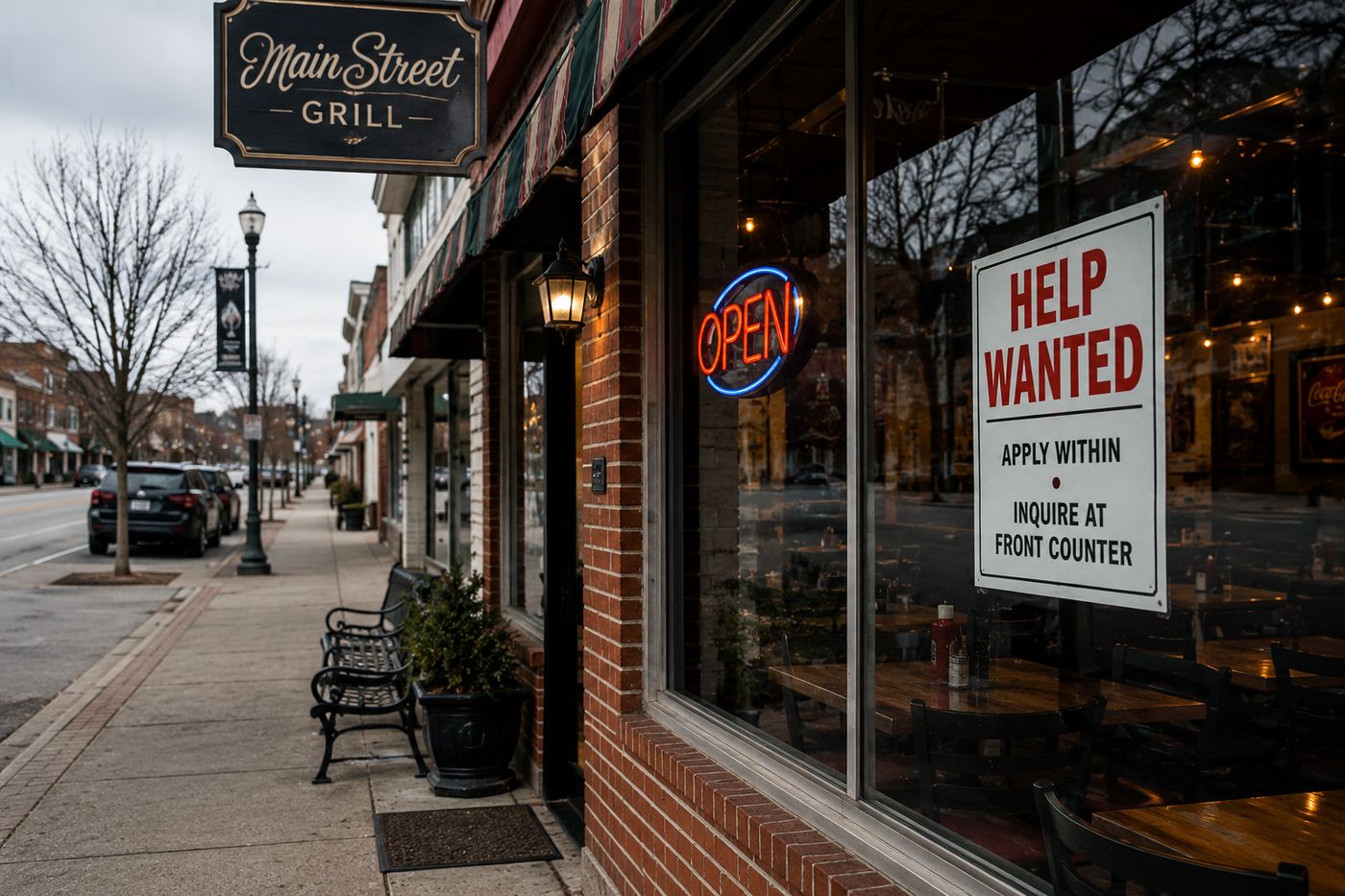
A new analysis from the conservative Employment Policies Institute warns that a proposed federal minimum wage increase to $25 per hour — championed by progressive members of Congress including Rep. Alexandria Ocasio-Cortez and backed by the Living Wage for All Act introduced by Sen. Chris Murphy — would eliminate nearly five million jobs nationwide, with the most devastating losses concentrated in the booming Sun Belt states where the federal wage floor remains unchanged at $7.25.
The proposal, introduced in the Senate in June, would raise the federal minimum wage to $25 per hour for large employers by 2032 and for small businesses by 2039 — more than tripling the current floor that has not been adjusted since 2009. It would also eliminate the federal tip credit, meaning tipped workers in restaurants and service industries would be entitled to the full $25 in direct cash wages regardless of gratuity income. The Employment Policies Institute projects that states including Texas, Florida, Pennsylvania, Georgia, North Carolina, Ohio, and Tennessee — all of which currently follow the federal $7.25 minimum — would absorb the largest absolute job losses. These states have also been the primary beneficiaries of the economic migration from high-cost blue states over the past decade, and a $25 mandate would hit their lower-wage industries at precisely the moment their economies are most competitive.
"Some of the top states that are going to be impacted by a $25 minimum wage include Texas, Pennsylvania, Florida, Ohio, Tennessee. These states have a massive workforce — and a $25 minimum wage represents more than tripling the current minimum." — Rebekah Paxton, Employment Policies Institute
The EPI's five million job estimate reflects a fundamental economic reality that minimum wage proponents consistently understate: when the government mandates a wage floor significantly above what local labor markets would otherwise set, employers respond by reducing hours, accelerating automation, cutting staff, or closing entirely. This effect is not theoretical — it has been documented following prior minimum wage increases in California, New York, and Seattle, where studies have found measurable negative employment effects particularly for young workers, low-skilled workers, and those in industries with thin margins. A $25 federal mandate applied uniformly across markets as different as rural Tennessee and Manhattan would be an exercise in economically illiterate one-size-fits-all policymaking.
Proponents argue that approximately 66 million American workers — 45% of the workforce — currently earn less than $25 an hour, and that a higher floor would lift millions out of poverty while reducing income inequality. The Congressional Budget Office's prior analysis of a $15 minimum wage found it would raise wages for 17 million workers while eliminating 1.3 million jobs — a tradeoff supporters found acceptable. Extrapolating that ratio to $25 suggests the job losses at the higher level would be proportionally far more severe, particularly given how many more workers and businesses would be affected by an increase of this magnitude.
The federal minimum wage has remained at $7.25 per hour since July 2009 — the longest period without an increase in the history of the Fair Labor Standards Act. Seventeen states and Washington D.C. now have minimum wages of $15 or higher. The Living Wage for All Act is co-sponsored in the Senate by Senators Blumenthal, Kim, and Wyden, and has House companions introduced by Representatives Ramirez and Mejia. It is not expected to pass the Republican-controlled Congress but serves as a marker of the left flank's wage policy position heading into the 2026 midterms.
There is a productive debate to be had about the appropriate federal minimum wage. Five million job losses is not an acceptable outcome of that debate. Proponents of the $25 mandate owe the American workers they claim to represent an honest accounting of what happens to the entry-level jobs, the small business operators, and the low-margin industries in Texas and Florida when government mandates more than triple their labor costs overnight. Good intentions do not exempt economic policy from economic consequences.