
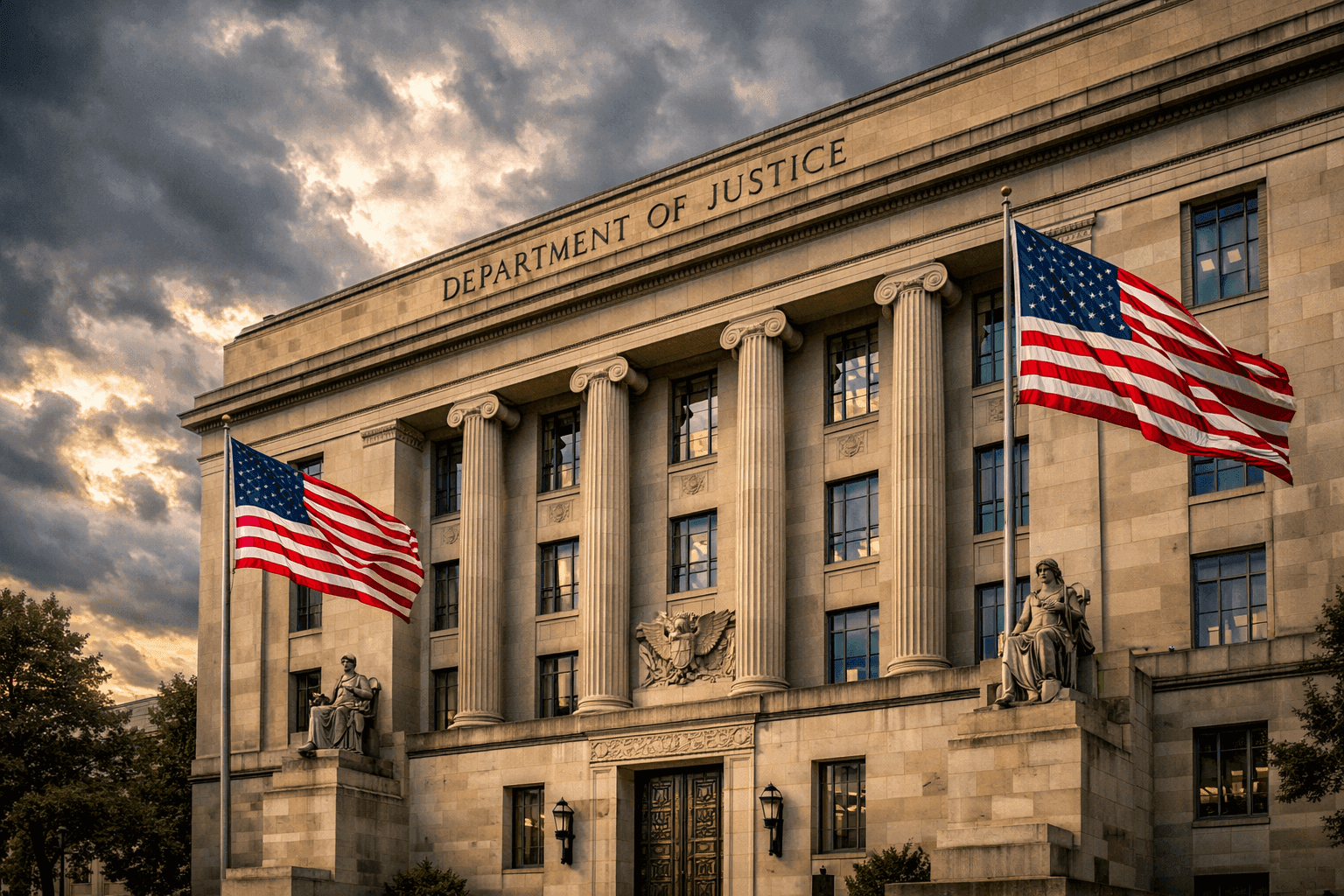
The Justice Department has granted Congress supervised viewing access to over three point five million unredacted Epstein documents starting February 9th in a secure reading room, following intense Democratic pressure claiming excessive redactions protect embarrassed officials.
House Judiciary Democrat Jamie Raskin pressed Deputy Attorney General Todd Blanche ahead of Attorney General Bondi's confirmation hearing, arguing that redactions serve political protection rather than legitimate privacy interests. The arrangement permits congressional review without electronic devices, allowing only handwritten notes from materials that remain locked within Justice Department headquarters.
Conservative transparency advocates note the irony of Democrats suddenly demanding document access after years of blocking Republican requests for materials related to various Biden administration controversies. The Epstein Files Transparency Act signed by Trump mandates minimal redactions, yet Democrats accuse the department of non-compliance despite deploying five hundred staff reviewers specifically to process victim protection requirements.
"Trump-signed Epstein Files Transparency Act mandates minimal redactions, but Democrats accuse DOJ of non-compliance despite 500 staff reviewers working to protect victim privacy while enabling transparency."
Public releases have already exposed victim personally identifiable information through redaction errors, prompting lawsuits from individuals whose privacy the process purportedly protects. This demonstrates genuine tension between transparency demands and victim protection rather than simple political obstruction, though Democrats dismiss such concerns as excuses for shielding powerful individuals from accountability.
The Epstein document trove includes flight logs, communications, financial records, and investigative materials accumulated over years of federal probes into the deceased financier's sex trafficking network. Full unredacted access remains restricted to Congress under supervised conditions designed to prevent unauthorized copying or public disclosure of sensitive information.
Long-term risks include political weaponization where Democrats selectively leak embarrassing information about Trump associates while protecting their own allies mentioned in documents. This concern explains Justice Department hesitancy about blanket disclosure despite transparency commitments. Epstein's elite network crossed partisan lines, meaning complete transparency threatens powerful figures across the political spectrum. Whether this arrangement produces genuine accountability or simply another political circus depends on whether both parties commit to exposing all wrongdoing rather than scoring selective partisan points. Victims deserve full truth about who enabled Epstein's crimes regardless of political affiliations that perpetrators hide behind.