
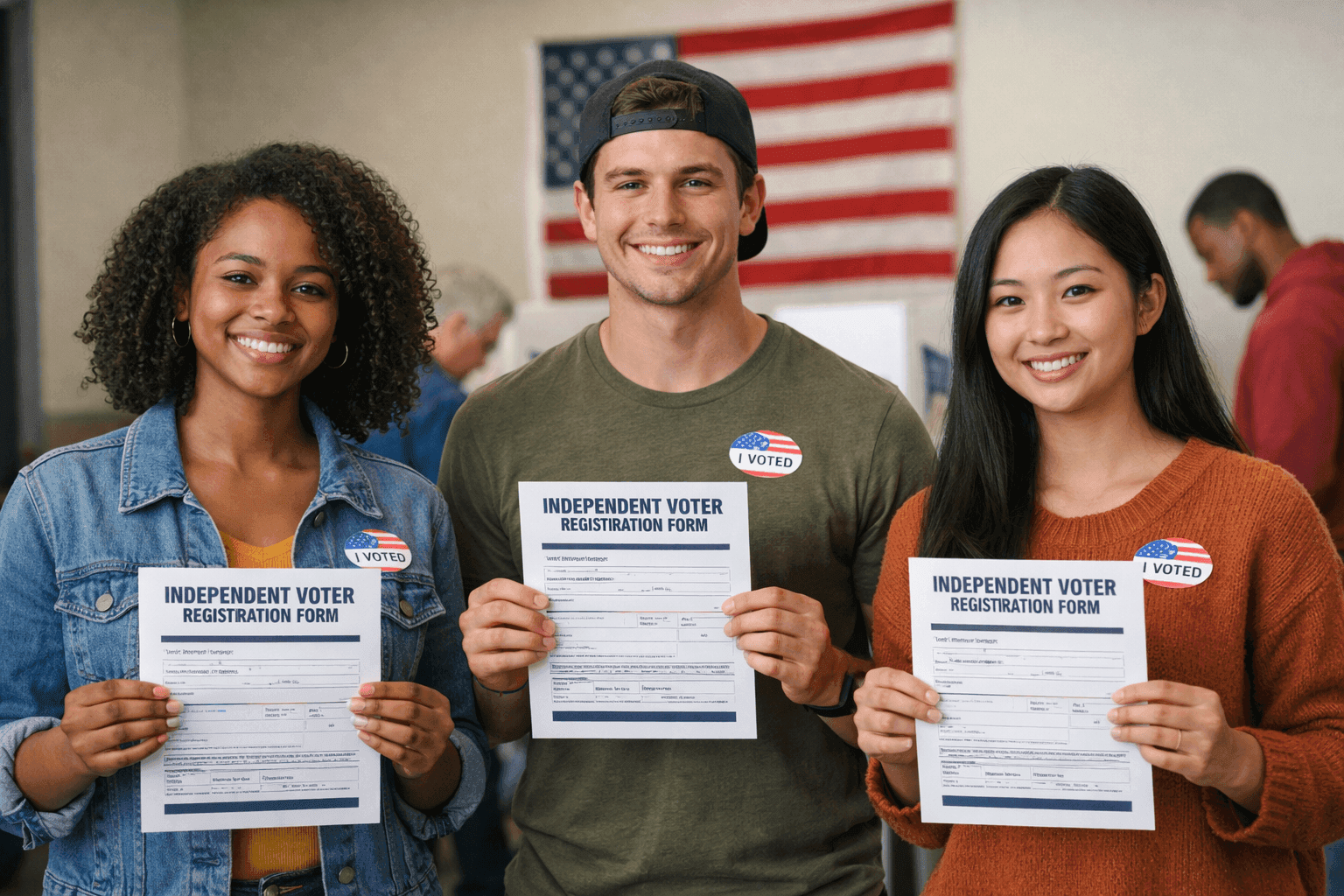
A record forty-five percent of Americans now identify as political independents according to 2025 polling data, with both major parties tied at just twenty-seven percent each in a dramatic rejection of traditional partisan allegiances led primarily by younger voters.
Gen Z spearheads this exodus with fifty-six percent claiming independent status, followed closely by millennials at fifty-four percent. Unlike previous generations who drifted toward party identification as they aged, younger Americans maintain their independence while entering career and family stages that historically promoted partisan alignment.
Yale research reveals a surprising ideological split within Gen Z demographics. Voters aged eighteen to twenty-one lean Republican by nearly twelve points, while those twenty-two to twenty-nine favor Democrats by over six points. This unusual pattern suggests significant differences in political formation between cohorts separated by just a few years of age and formative experiences.
"Gen Z leads the revolt with 56% identifying as independent, maintaining independence as they age unlike previous generations, while 74% of all independents want viable third-party options."
Seventy-four percent of independents express desire for viable third-party alternatives, signaling deep dissatisfaction with binary choices that both major parties currently offer. Conservative analysts recognize this represents both opportunity and challenge—young voters reject Democratic progressivism but also question whether Republican platforms address their specific concerns about economic mobility, housing affordability, and institutional dysfunction.
Previous generations of Americans increasingly identified with political parties as they aged, married, purchased homes, and raised children. The current pattern where younger voters maintain independent status through these traditional milestones represents a fundamental shift in how Americans relate to partisan political structures.
The two-party system faces an existential crisis when nearly half the electorate rejects both options while demanding alternatives. Neither Democrats nor Republicans can claim popular mandate when combined they represent barely more than half of voters. This independent surge particularly threatens establishment politicians who assume partisan loyalty rather than earning voter support through policy responsiveness. Gen Z's political independence may force overdue reckoning where parties must compete for support rather than taking voters for granted based on demographic assumptions or lesser-evil calculations that no longer resonate with Americans tired of choosing between unsatisfactory options.