
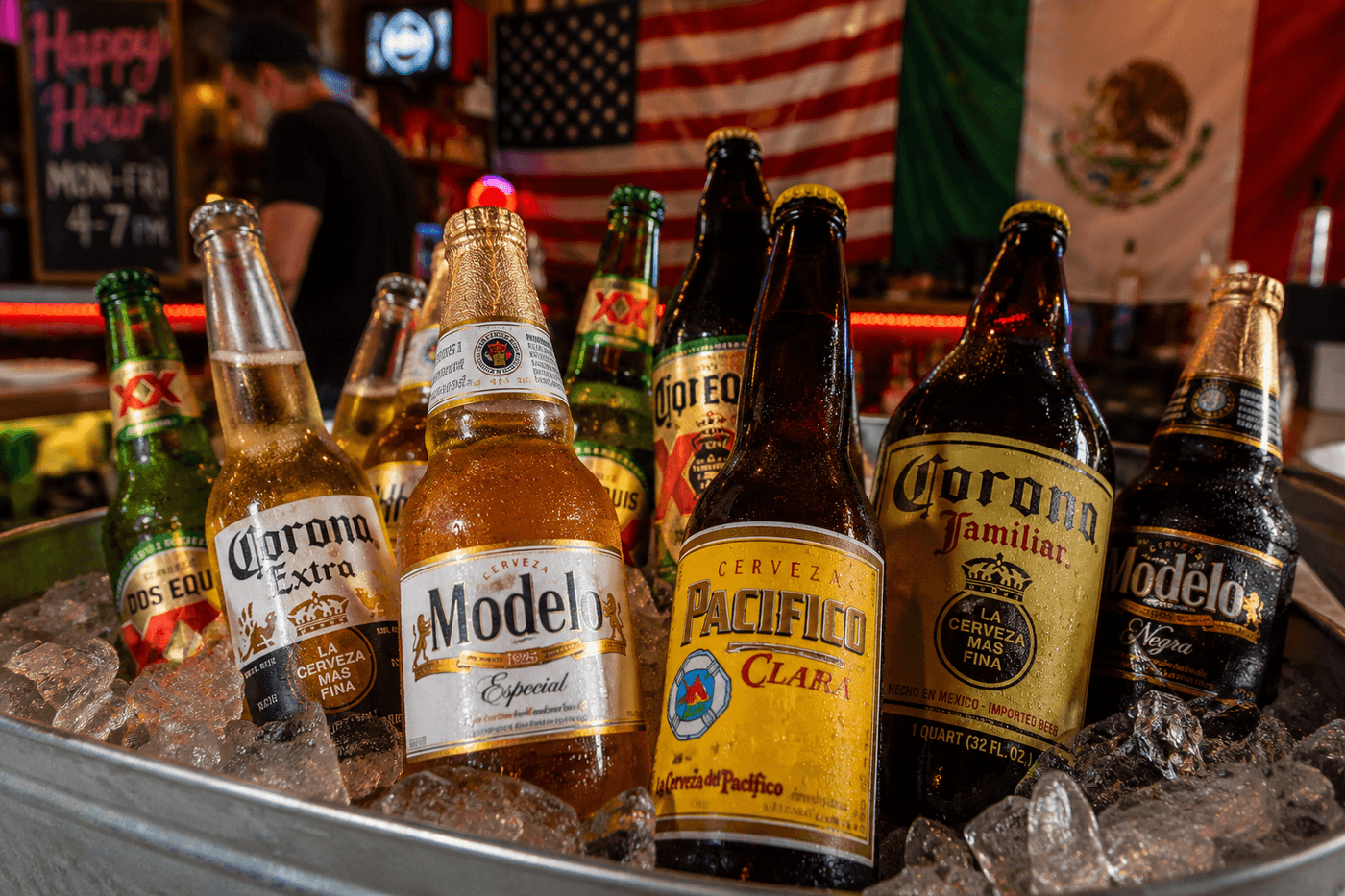
As the Trump administration weighs tariffs on Mexican beer — a category that includes the two best-selling import brands in the United States — a new economic analysis argues the policy would undercut the very American workers it is intended to help, because the vast majority of the value generated by those beers already flows directly into the American economy.
The report, authored by Unleash Prosperity co-founder Stephen Moore and economist David Ozgo, finds that for every gallon of Mexican beer sold in the United States, approximately $19.42 of the $26.27 in total economic value generated — roughly 74% — ends up in the pockets of American businesses and workers through domestic distribution, retail, transportation, marketing, taxes, and related economic activity. By comparison, leading domestic beers generate about $15.76 in total value per gallon across the same channels. The U.S. beer industry as a whole supports approximately 1.74 million jobs, but only about 5% of those workers are employed in brewing itself. The overwhelming majority work in wholesale, retail, restaurants, bars, and supply chains that handle beer after it is brewed — jobs that remain in the United States regardless of where the beer is made.
"If you end up slapping tariffs on Mexican beer, you're not protecting American workers. What you're really doing is cutting into the most profitable segment of the beer market right now and in turn putting U.S. jobs at risk." — Economist David Ozgo
Mexican beer already commands a significant premium — selling for roughly 52% more than mass-market domestic lagers in grocery and liquor stores. Those higher prices generate larger margins for U.S. distributors, retailers, and hospitality businesses at every point in the supply chain. A tariff that raises import costs would force brewers to either absorb the expense and reduce investment, or pass the cost on to consumers through higher prices — either of which compresses the margins that support American jobs downstream. The report also raises a branding risk: moving production of authentic Mexican beers to the United States to avoid tariffs could damage the very brand equity that makes those beers worth a premium. The authors point to Anheuser-Busch InBev's decision to move Beck's production from Germany to Missouri — a move that triggered consumer litigation after the company continued marketing the beer as an authentic German import.
The Trump administration's tariff agenda has been explicitly designed to re-shore manufacturing, reduce trade deficits, and strengthen American industry — legitimate goals that have produced real results in sectors ranging from steel to semiconductors. But Moore and Ozgo argue that beer simply does not fit the framework. There are no national security implications. There is no manufacturing base to protect. And the structure of the American beer economy means that taxing the import primarily transfers money away from the American distribution and hospitality sectors rather than building anything domestic.
Modelo Especial surpassed Bud Light as the best-selling beer in the United States in 2023 and has maintained that position. Corona Extra is the leading imported beer brand. Together, Mexican beers account for a substantial and growing share of the American beer market. The Trump administration has not formally announced tariffs on Mexican beer but has signaled the category is under consideration as part of broader trade negotiations with Mexico.
Conservatives should be the first to push back when a proposed tariff is likely to hurt the very workers it claims to protect. The economic case for tariffs rests on protecting domestic industries from unfair foreign competition — not on taxing import products whose value chain is predominantly American. If 74 cents of every dollar spent on Mexican beer already goes to an American worker or business, the honest question is: what exactly does a tariff here protect? The answer, in this case, appears to be not much — and the costs would be real.