
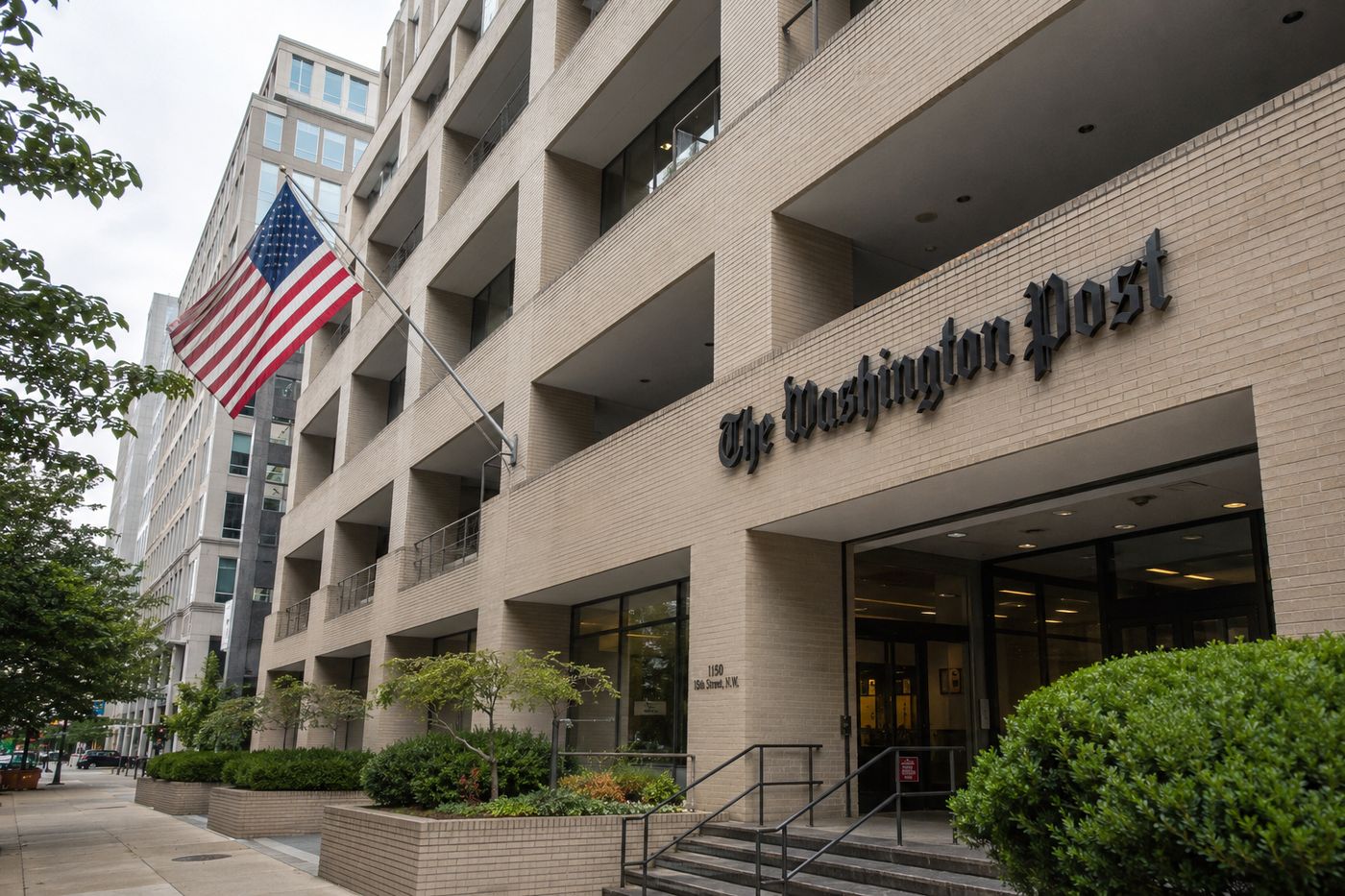
A private arbitrator has ordered The Washington Post to immediately reinstate opinion columnist Karen Attiah with full back pay and lost benefits, ruling that the newspaper lacked good and sufficient cause to fire her last September over social media posts she made following the assassination of conservative activist Charlie Kirk — a decision the Post's management had framed as a response to gross misconduct but that the arbitrator found violated the paper's collective bargaining agreement with its newsroom union.
Attiah, 39, was the Post's only Black opinion columnist and had been with the paper since 2014 when she was fired on September 18, 2025, one day after posting a series of statements on Bluesky in reaction to Kirk's killing. Her posts — which included commentary on race, violence, and what she described as double standards in how America processes political deaths — drew immediate public backlash and online threats against Post staff. Management cited her posts as violations of the company's social media policy and described them as harming the paper's integrity. Attiah filed a grievance under the Post Guild's collective bargaining agreement. Arbitrator Sarah Miller Espinosa issued a 39-page ruling on August 20 — made public Monday by the Democracy Defenders Fund — finding that the Post "did not have good and sufficient cause" to terminate Attiah and "violated" its labor agreement. The arbitrator found the Post "failed to establish the grievant engaged in gross misconduct."
"After the Washington Post fired me last year for speaking the truth in the wake of the Charlie Kirk killing, I fought back. And I'm happy to announce: I won my case against the Washington Post. They have been ordered to reinstate me immediately." — Karen Attiah, Bluesky post Monday
The ruling lands in the middle of an already turbulent period for the Washington Post. Owner Jeff Bezos has pushed the paper's opinion section toward a more libertarian, free-market orientation, and editor-in-chief Will Lewis has overseen a controversial restructuring of the newsroom that drew widespread criticism from the paper's own journalists. The Attiah case adds a new dimension to those tensions — a ruling that the Post acted improperly in terminating a prominent Black columnist in the immediate aftermath of a high-profile political assassination, under pressure from public backlash and at a moment when the paper's management was acutely sensitive to external perceptions. The Post said it respects the arbitration process but declined further comment.
From a conservative perspective, this ruling is complicated. Karen Attiah's posts following Kirk's killing were offensive to many of his supporters and admirers, and the reaction from Post management to terminate her reflected a genuine institutional judgment about conduct standards. An arbitrator has now overruled that judgment on contractual grounds — finding not that Attiah's posts were acceptable, but that the Post's firing process did not meet the "good and sufficient cause" standard its labor agreement requires. The case illustrates the constraints that union contracts place on management's ability to respond to conduct controversies, and it will almost certainly shape how other media organizations approach similar situations going forward.
Charlie Kirk, founder of Turning Point USA, was assassinated in September 2025. His killing prompted an outpouring of tributes from conservative politicians, media figures, and supporters, as well as condemnation of a small number of media figures and commentators whose reactions were perceived as celebrating or minimizing his death. Karen Attiah was among the highest-profile figures disciplined by their employers following posts that drew criticism in that period. The Washington Post's decision to fire her was widely reported at the time as a decision driven in part by public and advertiser pressure.
The arbitration ruling does not vindicate Karen Attiah's posts — it vindicates her union contract. That is a meaningful distinction the Post's management and its critics should both hold clearly. A media company's ability to set and enforce conduct standards for its journalists is not unlimited when those journalists are covered by collective bargaining agreements, and the lesson of the Attiah case is not that inflammatory social media posts are consequence-free but that consequences, when pursued, must be pursued through the processes the employer agreed to when it signed the contract.