
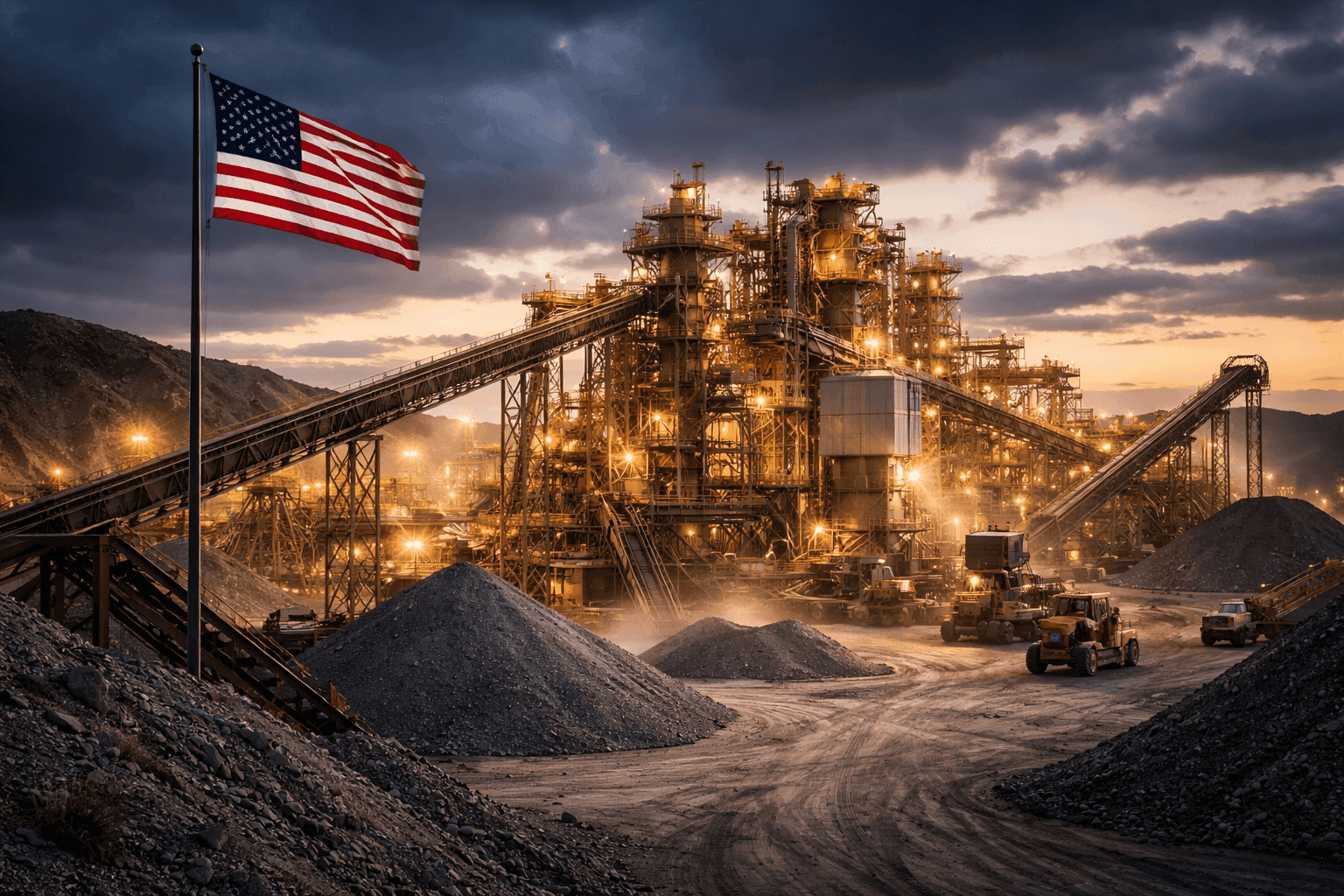
President Trump announced a twelve billion dollar strategic mineral reserve on Monday, February 2nd, targeting China's stranglehold on critical mineral supply chains that underpin everything from military hardware to consumer electronics in the American economy.
The initiative represents a major escalation in efforts to reduce American vulnerability to Chinese manipulation of rare earth elements and other strategic materials essential for modern technology and defense systems. For too long, American manufacturers have depended on potentially hostile foreign suppliers for materials that should never have been allowed to concentrate in adversarial hands.
Conservative national security experts have warned for years about the dangers of Chinese mineral dominance. Beijing controls extraction, processing, and distribution of materials like lithium, cobalt, and rare earth elements that power smartphones, electric vehicles, missile guidance systems, and countless other critical applications. This concentration creates leverage that China can weaponize during conflicts or trade disputes.
"The $12 billion strategic mineral reserve represents a major step toward tackling China's advantage in a crucial sector of the U.S. economy and reducing American vulnerability to supply disruptions."
The reserve will stockpile critical materials while supporting domestic mining and processing operations that can eventually reduce American dependence on foreign sources. Previous administrations recognized the problem but failed to take decisive action, allowing China to further consolidate its position while American capabilities atrophied from neglect and regulatory obstacles.
China has systematically built mineral supply chain dominance through strategic investments in foreign mining operations, development of domestic processing capabilities, and willingness to tolerate environmental damage that American regulations prohibit. This approach gave Beijing control over materials that the United States once produced domestically before regulatory burdens and cheap foreign competition devastated American operations.
The strategic reserve addresses a genuine national security vulnerability that threatens both military readiness and economic competitiveness. China should not control materials essential for American defense systems or commercial technologies that drive economic growth. While twelve billion dollars represents substantial investment, the cost of continued dependence on potentially hostile suppliers during future crises would prove far higher. Trump's initiative demonstrates understanding that national security extends beyond military hardware to include control over supply chains that enemies could exploit. American strategic autonomy requires domestic mineral capabilities that previous administrations allowed to wither through negligence and misguided faith in global trade arrangements.