
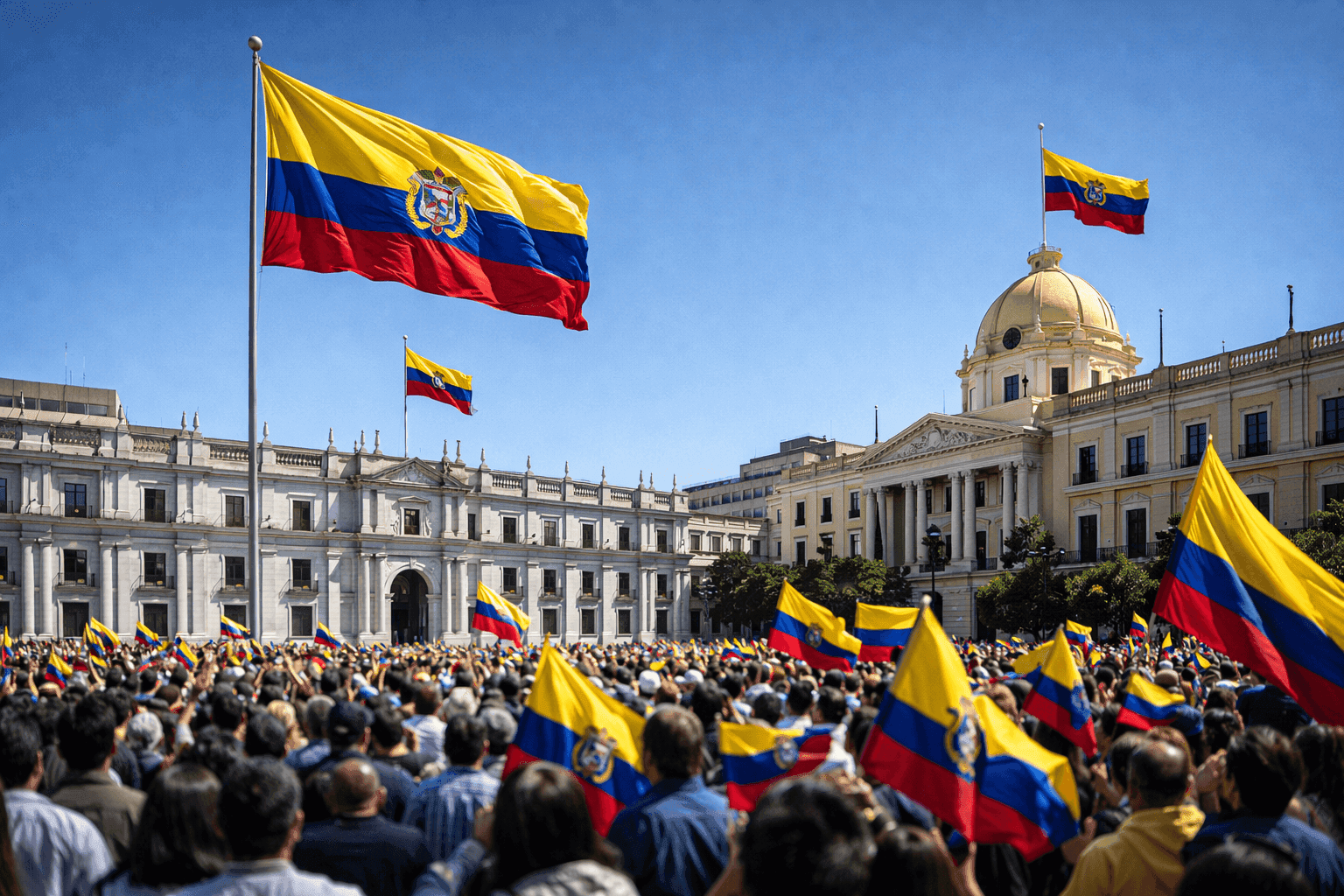
A conservative wave is reshaping Latin American politics as nation after nation rejects socialist experiments in favor of right-leaning leaders pursuing closer ties with the United States, marking a dramatic reversal from the region's leftward drift of previous decades.
Costa Rica's Laura Fernández represents the latest conservative candidate gaining momentum, but her thirty-nine-year-old campaign fits within a broader pattern. From Argentina to Chile, voters are decisively turning toward free-market policies and traditional values after experiencing the failures of leftist governance firsthand.
Ecuador's Daniel Noboa strengthened his mandate by defeating leftist Luisa González with fifty-six percent in his reelection bid, improving on his initial fifty-two percent victory. Voters clearly appreciated his conservative approach enough to grant him an expanded majority, rejecting socialist alternatives that promised more government control and economic stagnation.
"Country after country in Latin America has moved right, with conservative parties winning elections and then pursuing closer diplomatic and economic ties with the United States."
Bolivia delivered perhaps the most stunning rebuke to socialism when Rodrigo Paz's victory obliterated the MAS party that dominated politics for two decades. Economic incompetence and rampant corruption reduced MAS to just two congressional seats, demonstrating that voters eventually hold failed leftist governments accountable when alternatives emerge.
Argentina's midterm elections ratified public confidence in Javier Milei's bold reforms, giving his coalition majorities in both legislative chambers. Chilean voters delivered an even more decisive message by electing free-market candidate José Antonio Kast with fifty-eight percent, ending Gabriel Boric's left-wing administration and signaling appetite for dramatic policy shifts. Honduras followed suit when Nasry Asfura won with explicit backing from President Trump, while Argentina and the United States' conservative turns appear to have accelerated the regional trend.
Latin America experienced a leftward shift in the early 2000s as voters elected socialist leaders promising wealth redistribution and reduced American influence. Many of these governments delivered economic chaos, corruption scandals, and authoritarian tendencies instead, creating conditions for the current conservative resurgence.
This conservative wave represents more than electoral cycles shifting back and forth. Latin American voters are rejecting socialism after witnessing its predictable failures in Venezuela, Cuba, and their own nations when leftists gained power. The movement toward market economics and American partnership signals recognition that prosperity requires limited government, private enterprise, and integration with successful economies rather than revolutionary rhetoric and state control. As the trend continues, the Western Hemisphere may finally achieve the stability and growth that socialist experiments consistently promised but never delivered.