
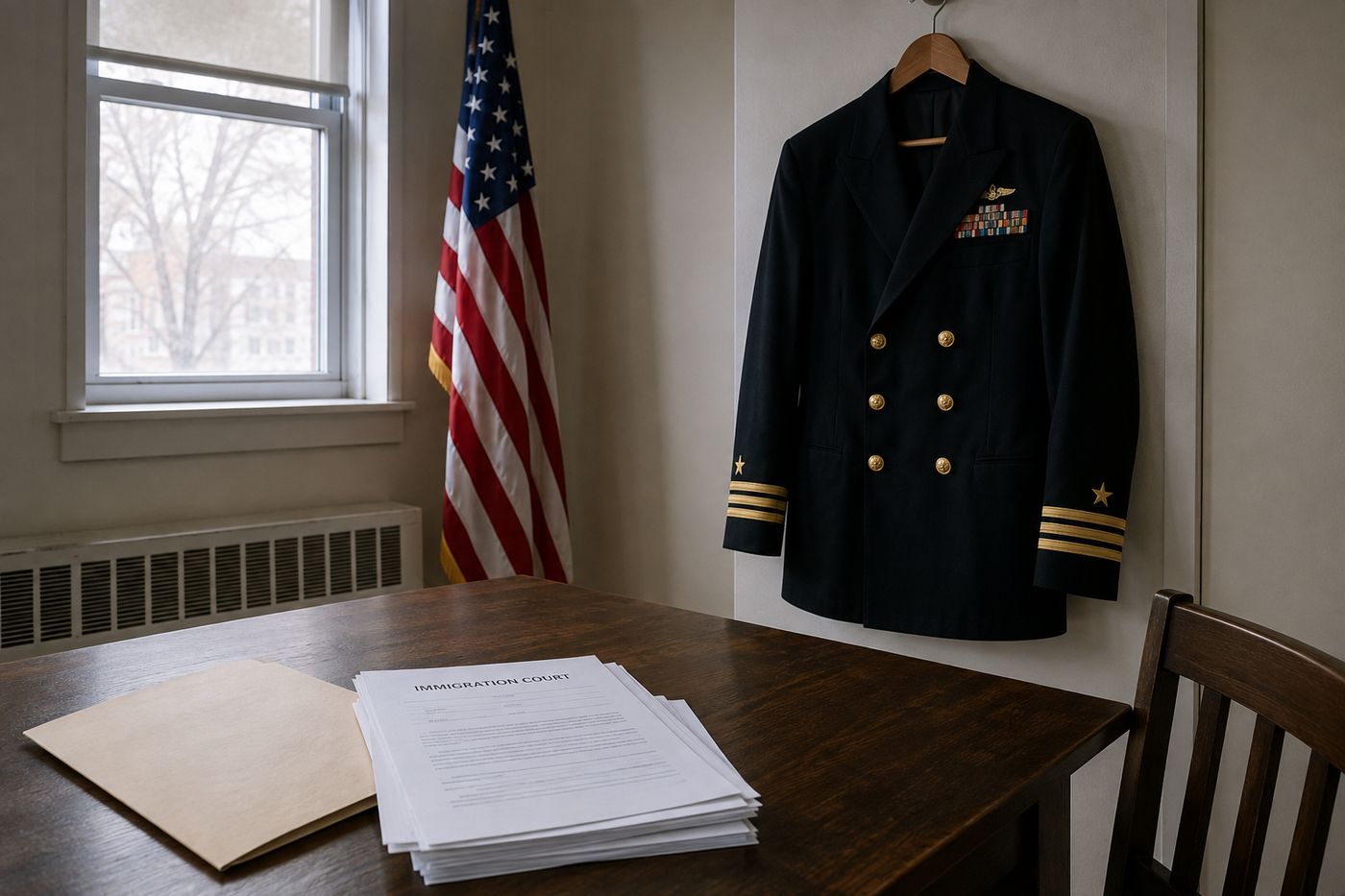
A United States Navy veteran who served three tours of duty during the Iraq War is now being held at the Otay Mesa Detention Center in San Diego facing deportation to Mexico — a country he has not lived in since childhood — after completing a prison sentence for drug convictions his mother and veteran advocates say stem directly from untreated combat trauma that the military and the VA failed to address when he came home.
Benito Miranda Hernandez came to the United States from Mexico as a young child with his mother Maria Miranda, both entering as legal permanent residents — green card holders. He grew up in California, joined the U.S. Navy, and served three combat tours in Iraq. His mother told NBC San Diego that the son who came home from those deployments bore no resemblance to the boy who left. "When he came back, that's when I said, 'This isn't my son anymore,'" she said. "He wasn't even a shadow of the little boy who left." In the years that followed, Miranda Hernandez accumulated drug convictions and served prison time. He had been working at a reentry employment program after his release when ICE took him into custody. Because he is a legal permanent resident who was convicted of deportable offenses — not a U.S. citizen — federal law makes him subject to removal despite his military service.
"When he came back, that's when I said, 'This isn't my son anymore.' He wasn't even a shadow of the little boy who left." — Maria Miranda, mother of Navy veteran Benito Miranda Hernandez
Miranda Hernandez is not an isolated case. Advocates with the Black Deported Veterans of America and the VetsForward organization have documented a pattern of immigrant veterans — those who served in the U.S. military as legal permanent residents rather than citizens — facing deportation proceedings following criminal convictions that advocates argue are directly tied to PTSD, traumatic brain injury, and other service-connected conditions that went untreated or undertreated after discharge. Federal law does not automatically grant citizenship to veterans who serve honorably, and those who are discharged without completing naturalization remain legally deportable if they accumulate qualifying criminal convictions. The Trump administration's aggressive deportation enforcement has made ICE more likely to detain veterans in this category immediately upon release from state or federal custody.
Immigration and veteran advocacy organizations are asking the administration to exercise prosecutorial discretion in cases involving combat veterans — to weigh the service, sacrifice, and likely connection between wartime trauma and subsequent criminal behavior before proceeding with deportation. That argument is not a legal defense. Courts have generally held that military service does not exempt non-citizen veterans from immigration consequences of criminal convictions. It is a moral and policy argument — one that asks whether a country that sent men like Benito Miranda Hernandez to three combat deployments in a war fought in its name owes them something more than a one-way ticket to a country they barely remember.
An estimated 90,000 active-duty military service members and veterans in the United States are non-citizens, according to the Migration Policy Institute. The military offers expedited naturalization pathways for honorably serving members — but many veterans are discharged without completing the process. Legal permanent residents who serve and are discharged without naturalizing retain deportability if they accumulate qualifying criminal convictions, a legal vulnerability that advocacy organizations say the VA and the Pentagon have long failed to adequately communicate to the service members affected.
There is a legitimate debate to be had about whether criminal convictions should disqualify non-citizen veterans from remaining in the country they served. That debate should account for the specific conditions under which those convictions occurred — for the documented connection between combat exposure, PTSD, and substance abuse; for the systematic failures of a VA mental health system that has never adequately served veterans who returned from Iraq and Afghanistan; and for the basic moral question of what a country owes the people it asked to serve in its name. Benito Miranda Hernandez served three tours. The least the United States can do is give his case serious consideration before deporting him to a country he left as a child.