
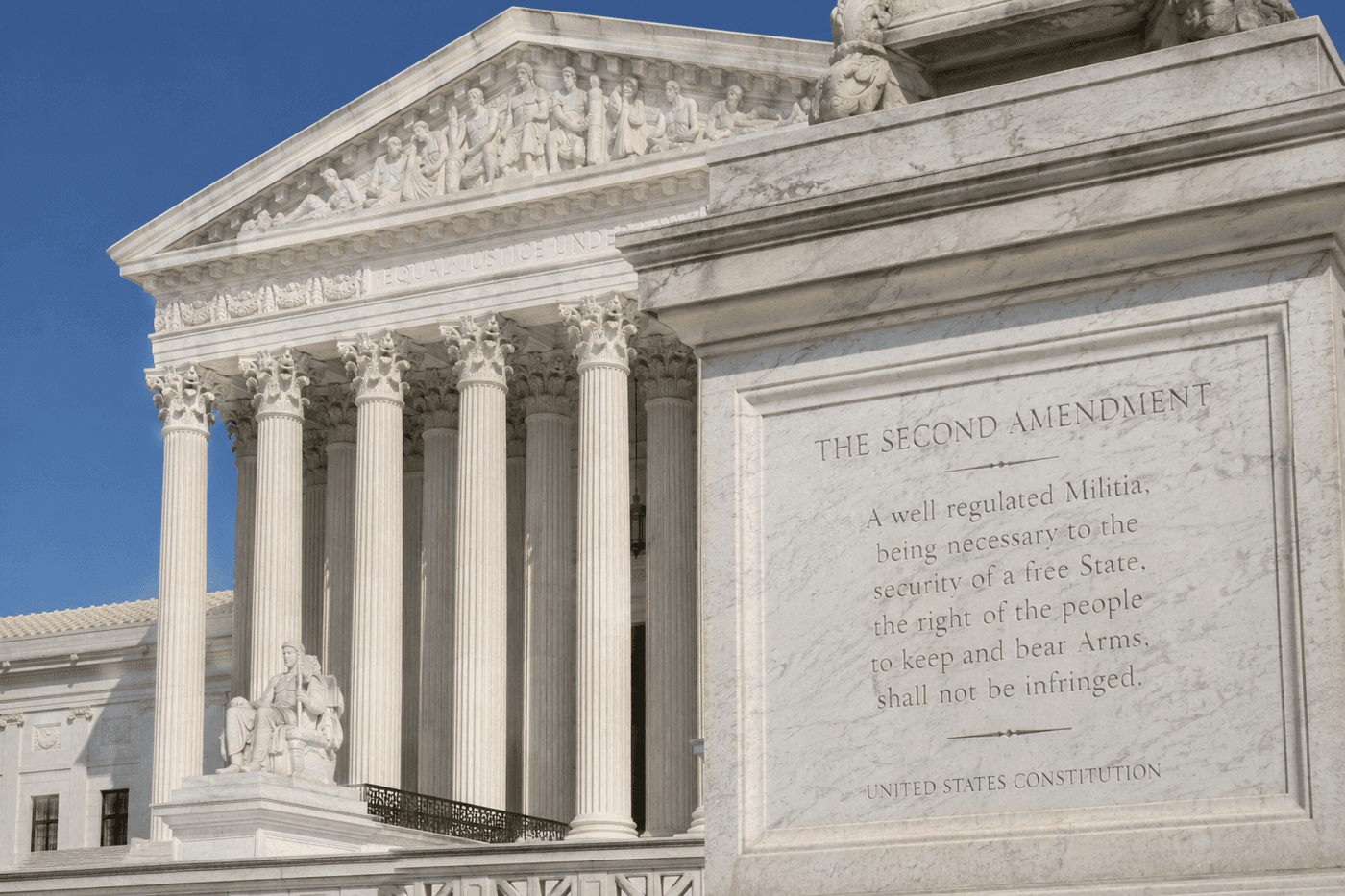
A coalition of gun-rights groups has asked the Supreme Court to block a Maryland law that bars even concealed-carry permit holders from carrying firearms at sensitive places such as state parks, museums, and mass transit, arguing the state has put so much public space out of bounds that it undermines a meaningful right to public carry at all.
A lower appeals court upheld Maryland's law, saying some public locations must be able to be off-limits for guns. However, the law's opponents contend that by designating vast swaths of public space as gun-free zones, Maryland effectively nullifies the Second Amendment right to bear arms in public that the Supreme Court has recognized in recent landmark decisions.
"The state has put so much of the public space out of bounds that it could undermine a meaningful right to public carry at all, effectively rendering Second Amendment protections meaningless through comprehensive location-based prohibitions."
Conservative Second Amendment advocates argue that Maryland's approach represents exactly the kind of end-run around constitutional rights that progressive states employ when direct bans prove unconstitutional. By declaring most public spaces as sensitive places where firearms are prohibited, Maryland creates a legal framework that technically respects gun rights while practically eliminating opportunities for law-abiding citizens to exercise those rights outside their homes.
The case tests how broadly states can designate public areas as gun-free zones following Supreme Court decisions affirming individual rights to carry firearms for self-defense. While some locations—courthouses, schools—clearly qualify as legitimately sensitive places, Maryland's expansive list including parks and transit systems suggests an attempt to prohibit public carry through comprehensive location bans rather than direct restrictions the Court has rejected.
The Supreme Court's recent Second Amendment jurisprudence has established that Americans possess constitutional rights to carry firearms in public for self-defense, not just keep them in homes. However, the Court has acknowledged that some locations can be designated as sensitive places where firearms may be prohibited, creating disputes over how expansively states can define such areas.
Maryland's sensitive places law represents progressive states' strategy for nullifying Second Amendment rights through location-based prohibitions that technically comply with constitutional requirements while practically eliminating opportunities for lawful carry. If states can simply declare all public spaces as sensitive places where firearms are prohibited, constitutional rights become theoretical rather than practical. The Supreme Court should clarify that while genuinely sensitive locations can restrict firearms, states cannot evade constitutional protections by designating essentially all public areas as off-limits, rendering the right to bear arms meaningless outside private property.