
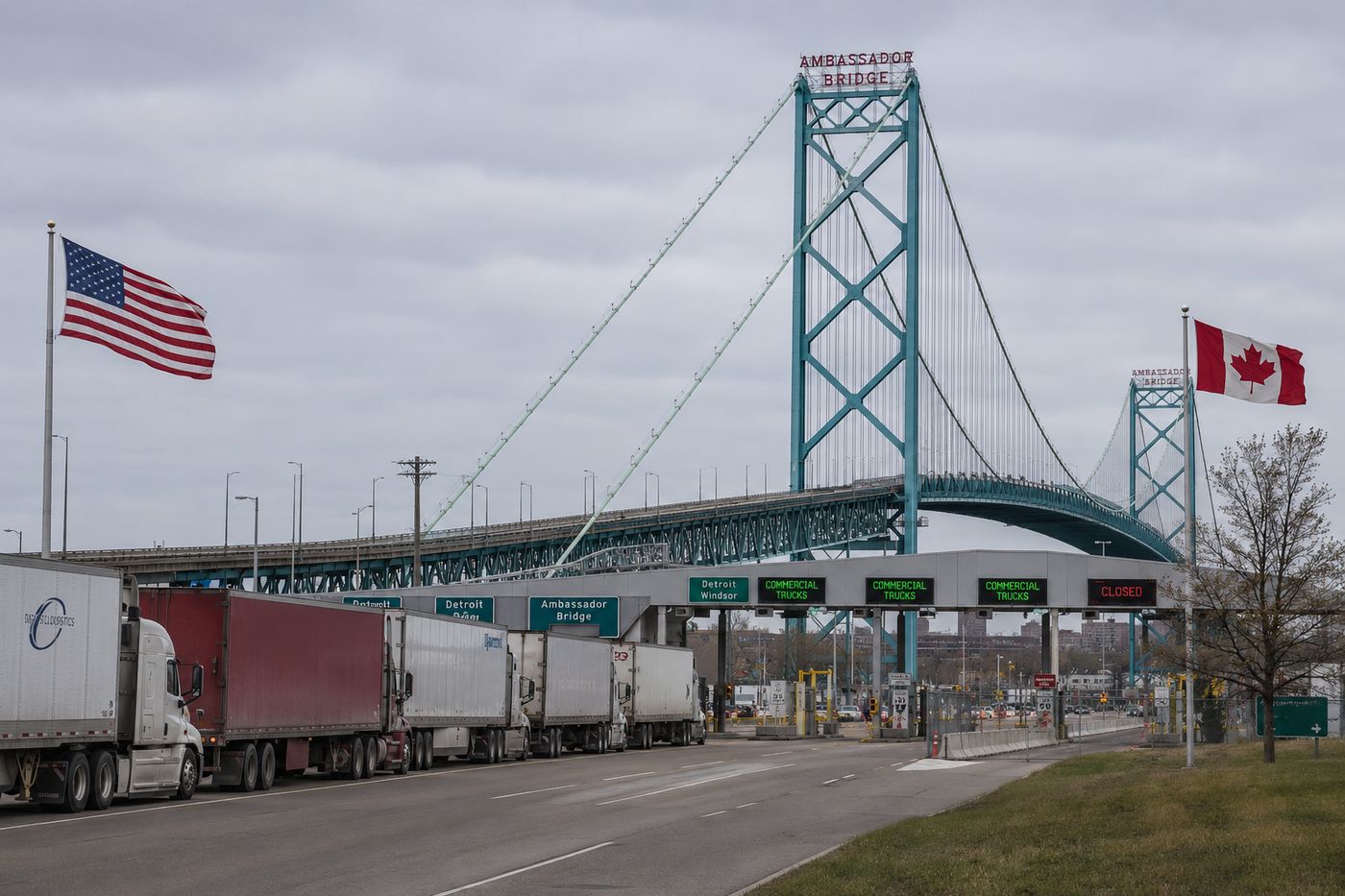
President Trump announced Monday that the United States will impose 50% tariffs on all Canadian cars, trucks, automotive parts, and steel beginning January 1, 2027 — doubling the current 25% rate and dramatically escalating a trade war that exploded over the weekend when Washington slapped 50% duties on $20 billion in other Canadian goods after marathon trade negotiations collapsed.
Trump announced the new tariffs in a Truth Social post accusing Canada of years of unfair trade practices — specifically citing its high tariffs on American agricultural products and pointing to what he described as a $60 billion trade deficit with the United States. "Canada has been ripping off the United States of America for years," Trump wrote, adding that companies that manufacture their vehicles in the United States will face zero tariffs. "Canada will be treated like a State no longer!" The announcement follows the breakdown over the weekend of trade talks that had been aimed at replacing the existing tariff structure with a new framework. A deal on the table would have reduced the top-line tariff on Canadian cars from 25% to 15% — instead, the rate will now double to 50% in January. Canada has vowed to retaliate with its own tariffs on American products, set to take effect September 8.
"Canada has been ripping off the United States of America for years. On January First, 2027, Tariffs on all Cars, Trucks, both large and small, Automotive Parts, and Steel, will be increased to 50%. Canada will be treated like a State no longer!" — President Donald Trump, Truth Social
The stakes for the automotive sector are enormous. Canada is the second-largest source of U.S. vehicle imports, with more than $50 billion in Canadian-made cars and trucks crossing the border annually. Major manufacturers including General Motors, Ford, and Stellantis operate significant Canadian assembly operations — including the Windsor, Ontario plant that produces the Chrysler Pacifica — that would face severe cost pressure under a 50% tariff. Industry analysts warn the tariffs could add thousands of dollars to the sticker price of affected vehicles and force manufacturers to make difficult decisions about production relocation. The steel component of the announcement directly affects Canadian steel producers who supply American automotive manufacturers and construction companies.
Canadian Prime Minister Mark Carney responded sharply, calling the tariffs an attack on Canadian workers and promising that Ottawa would defend its interests through retaliatory measures. Canada's retaliatory tariffs on American products, announced Friday, cover a range of U.S. goods and are calibrated to apply political pressure in states with significant export exposure to Canada — a list that includes Michigan, Ohio, Pennsylvania, and Wisconsin.
Canada is the third-largest source of U.S. imports overall, with more than $380 billion in goods crossing the border in 2025. The U.S. exported $175.8 billion in goods to Canada in the first half of 2026 alone — making Canada the second-largest destination for American exports after Mexico. The automotive sector is the single largest component of cross-border trade between the two countries, with deeply integrated supply chains that have developed over decades under USMCA and its predecessor NAFTA.
President Trump's position is straightforward: Canada benefits enormously from access to the American market while maintaining its own protective barriers on agricultural imports, and the trade relationship needs to be restructured on terms more favorable to American workers and producers. That case has merit. The question is whether a 50% tariff on automotive imports — applied to a supply chain so deeply integrated that a single vehicle may cross the border multiple times during production — achieves that goal or simply raises prices for American consumers while disrupting industries on both sides of the border. The administration has until January 1 to find a better answer.