

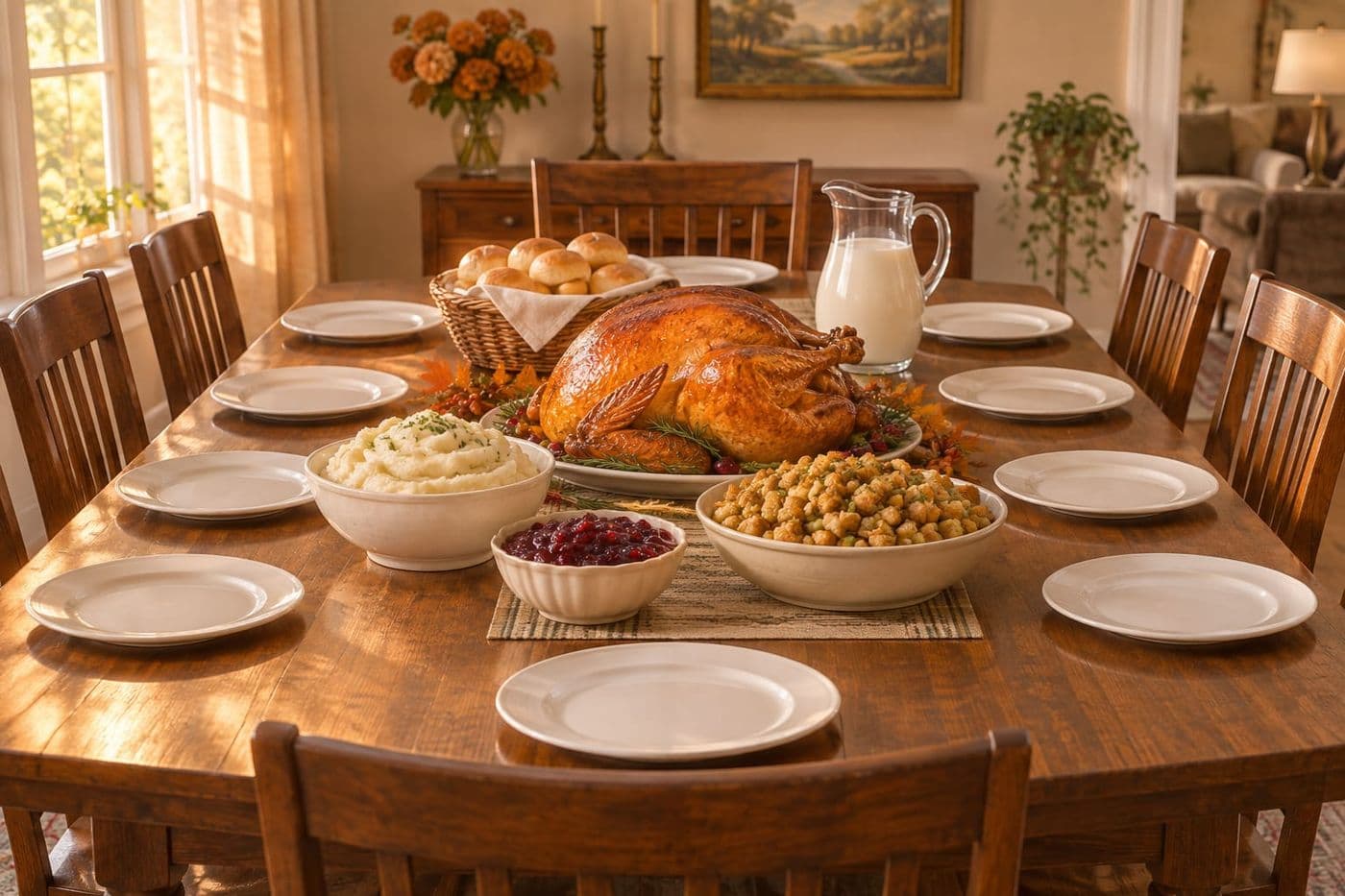
The American Farm Bureau Federation says a classic Thanksgiving dinner for 10 people will cost an average of $58.63 in 2026, about $5.86 per person and up roughly 6% from 2025 — the first overall increase since 2022, driven mostly by a turkey market still recovering from years of disease, and by the cost of moving food from farm to table.
The Farm Bureau released its 41st annual Thanksgiving survey on Wednesday, Nov. 18. The group has tracked the same classic menu since 1986 so prices can be compared across decades. Hundreds of volunteer shoppers in all 50 states and Puerto Rico checked prices in person and online during the first week of November, using grocery store apps and websites. They did not use special coupons or bundle deals. The survey is informal, and it produces a national average, not a price check for any one store or town. The largest driver was the turkey. A 16-pound frozen bird averaged $23.68, or $1.48 per pound, up $2.38, or about 10%, from 2025. A dozen dinner rolls rose 7%, from $3.56 to $3.81. Milk, cranberries, potatoes and stuffing also cost more. About one-third of the items, however, fell in price, according to AFBF economist Faith Parum. Regional totals varied. The Northeast was the most expensive at $61.57, up from $60.82 in 2025. The Midwest averaged $56.89 and the South was the cheapest at $54.33. The West came in at $58.74, down from $61.75 a year earlier.
“The overall increase in our annual survey reflects the rising costs of getting food from the farm to your dinner table.” — AFBF deputy chief economist Faith Parum
This year's number needs perspective. The record was $64.05 in 2022, when the dinner jumped 20% in a single year. Then-chief economist Roger Cryan said general inflation had cut consumers' purchasing power. This year's price is $5.42, or 8.5%, below that peak. The Farm Bureau's expanded menu, which adds items such as boneless ham, russet potatoes and frozen green beans, cost $81.30 in 2022. Parum said the 10% rise in turkey prices was largely due to a recovering flock, which has faced what she called “a lot of disease pressure over the years” and is still rebuilding production. The Farm Bureau also points to diesel, which has made it more expensive for farmers to process and transport staples like milk, rolls, potatoes, frozen peas and cranberries. Parum said a shortage of farm labor has taken a toll too. The USDA forecasts the wholesale price of a whole frozen turkey hen at $1.76 per pound this year, up 29%.
Start with what is fair. A 6% increase is real money for a family already stretching a grocery budget, and nobody should wave that away. It is also true that this year's total remains below the 2022 peak, and that about a third of the items got cheaper. But the pieces of the increase that matter most are not mysteries. Diesel, labor and transport costs are the price of moving food, and every step between a farm and a dinner table carries them. When policy raises the cost of energy or makes labor harder to find, the bill does not stay on the farm. It lands on the grocery receipt. Families feel that at the checkout long before any official statistic arrives. The lesson is that affordability is built on the unglamorous basics: reliable fuel, a workable labor supply and a food system that can recover from shocks like disease without a government rescue. Cheap talk about the cost of living does not lower the cost of a turkey.
The $58.63 figure is a national average from an informal volunteer survey, so it is not the price at any particular store. Volunteers shopped without coupons or bundle deals, which means many shoppers can pay less. The Farm Bureau's economist noted that grocery stores love to offer turkey deals and that shoppers may find a good price closer to the holiday. Some volunteers found turkeys for as little as 69 cents per pound, compared with the $1.48 survey average. On a 16-pound bird, that gap is about $12.64. The survey also tracks a fixed classic menu, not what every household actually serves, so it works best as a yardstick over time rather than a personal budget.
Source:Americans will pay more for Thanksgiving dinners this year, Farm Bureau says
Every family knows the feeling of standing in the grocery aisle with a cart and a calculator, adding up the stuffing, the rolls and the bird. The Farm Bureau's survey is that same exercise, repeated across the country and back to 1986. This year the total moved up for the first time since 2022, and the reasons trace back to farms, trucks and fuel tanks. Shoppers can still do well by watching for turkey sales near the holiday, since Thanksgiving is Nov. 26. But the larger point stands. The price of the feast is the price of the supply chain behind it. Keep that chain affordable, and the table stays full.