
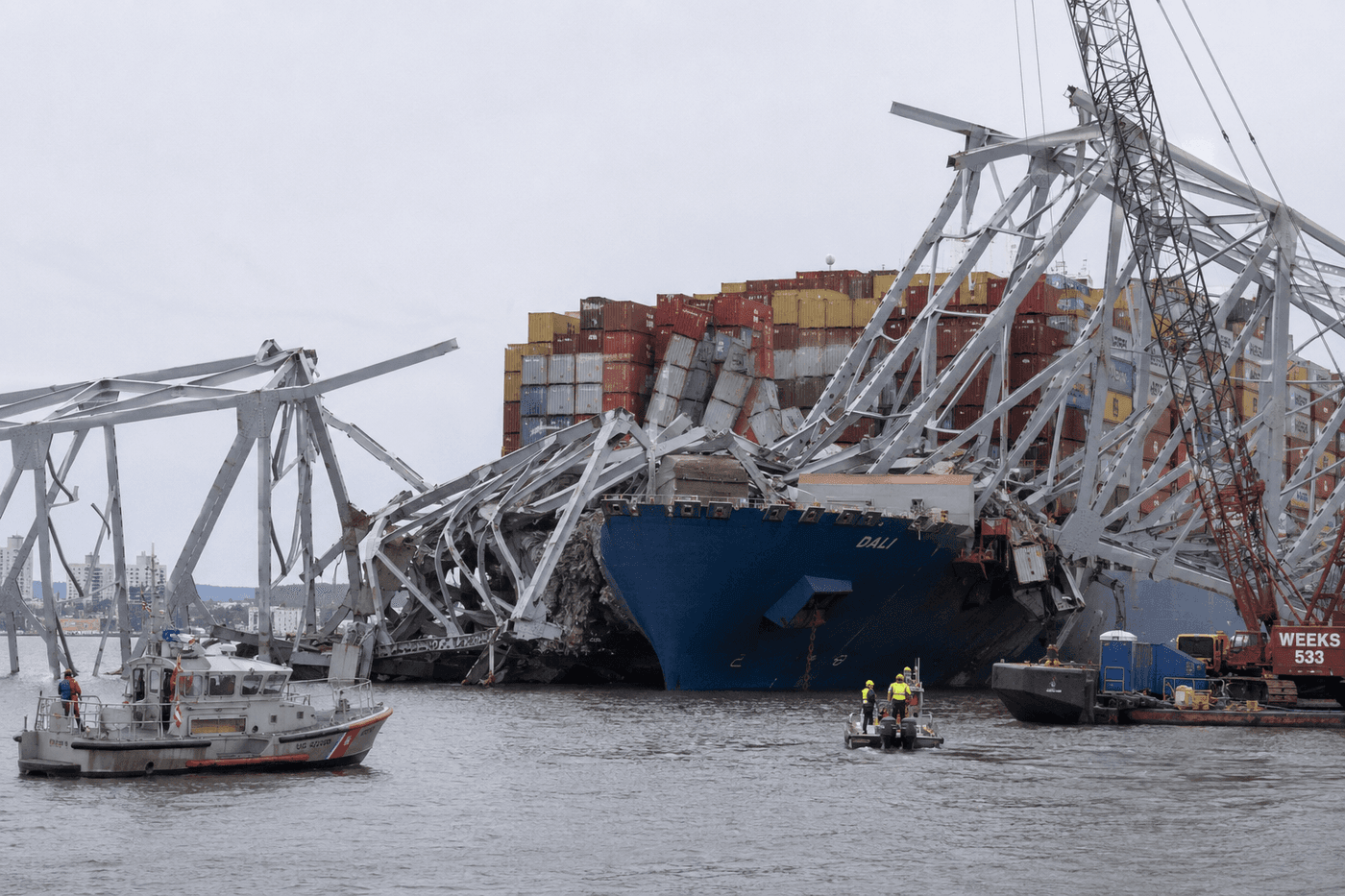
Federal officials announced Tuesday that criminal charges have been brought against the Singaporean operator and an employee of the container ship that downed Baltimore's Francis Scott Key Bridge more than two years ago, alleging the company improperly altered fuel pumps causing a second blackout that prevented safe navigation.
The April 8th indictment names Synergy Marine Pte Ltd based in Singapore, Synergy Maritime Pte Ltd based in India, and technical superintendent Radhakrishnan Karthik Nair, an Indian national, as defendants. Both companies and Nair are charged with conspiracy to defraud the United States, willfully failing to immediately inform the U.S. Coast Guard of a known hazardous condition, obstruction of an agency proceeding, and false statements.
"The indictment alleges that if the Dali had been using the proper fuel supply pumps, then the vessel would have regained power in time to safely navigate under the Key Bridge, preventing the catastrophic collapse that killed six workers."
Federal officials allege the company improperly altered flushing pumps on the Dali container ship to supply fuel to two of the ship's generators, ultimately causing a second blackout after the ship lost power initially due to a loose wire. The utilization of such flushing pumps is considered a violation of international law, with authorities alleging the company's operators—including Nair—knew about the improper use and the risks it presented.
U.S. Attorney Kelly Hayes said the indictment further alleges that after the crash, Nair falsely told the National Transportation Safety Board that he was unaware the Dali was using the flushing pump. Investigators found evidence of the pumps being used on three ships—including the Dali—operated by the company. The Dali was navigating out of Baltimore Harbor bound for Sri Lanka when it lost power and struck a support pier around 1:30 a.m. on March 26, 2024.
Maryland officials estimate it could cost between $4.3 billion and $5.2 billion to replace the bridge, which is set to reopen in late 2030. A civil trial is scheduled for summer addressing liability and damages for the catastrophic collapse that killed six construction workers and disrupted regional transportation for years.
The criminal charges demonstrate that the Key Bridge collapse resulted from corporate corner-cutting and deliberate equipment modifications violating international law rather than unavoidable accident. Six workers died because a shipping company improperly altered fuel systems creating known hazards, then lied to investigators about those modifications. The defendants face serious criminal consequences while Maryland taxpayers bear billions in reconstruction costs extending through 2030. The case demands maximum prosecution holding corporations accountable when their illegal practices cause catastrophic infrastructure failures killing American workers.