
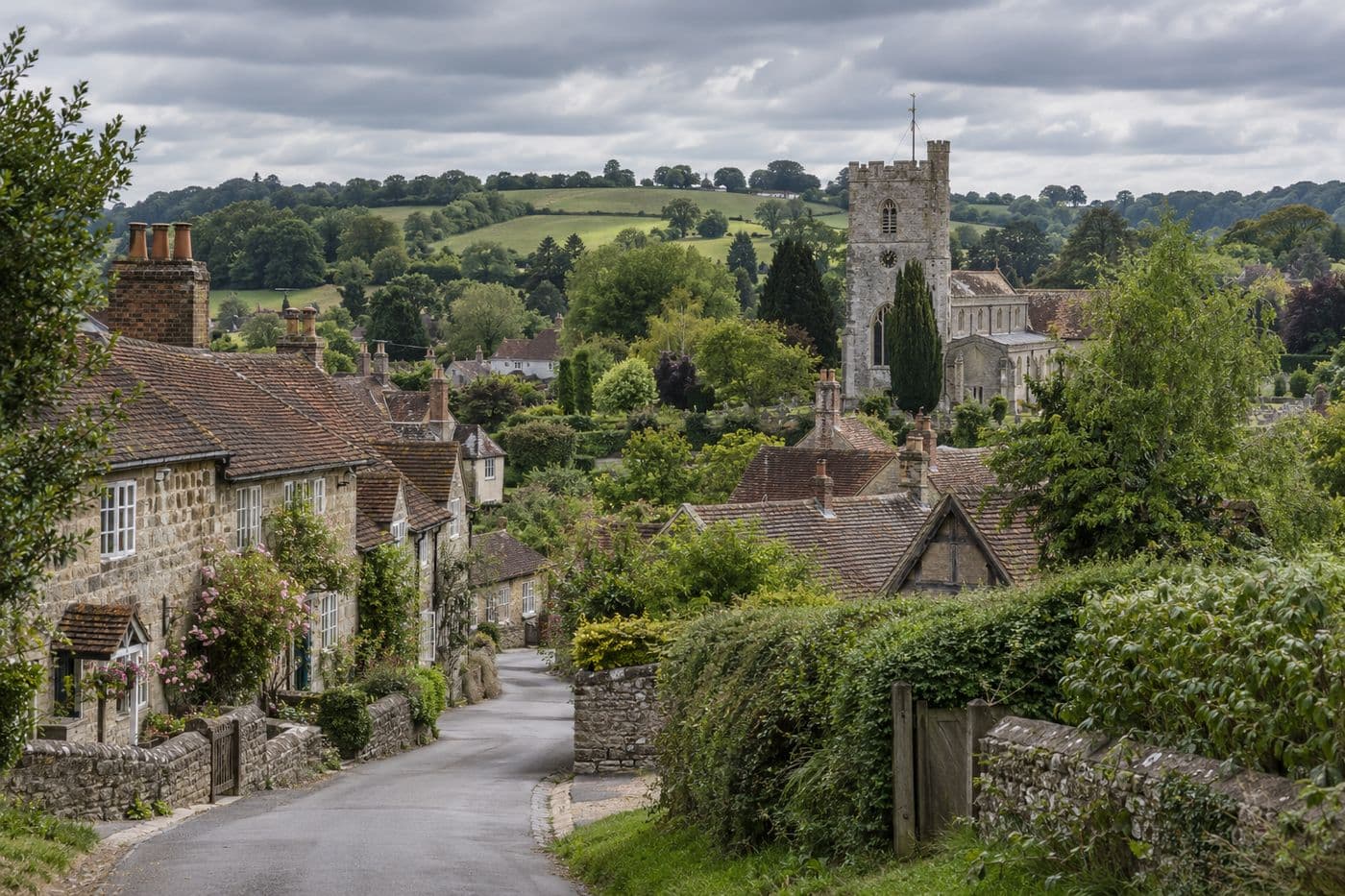
What was supposed to be a routine kitchen extension in the village of Wye in Kent, England, became a crime scene investigation, a sleepless night, and a seven-year journey through the British heritage bureaucracy — after a builder working on the home of Ross Sledger, 49, unearthed what turned out to be two sets of Anglo-Saxon human remains approximately 1,000 years old, including two skulls, a femur, ribs, part of a pelvis, and fragments of a humerus and finger bones.
Sledger's first reaction when his builder reported finding bones in 2019 was relaxed: he assumed they belonged to a farm animal or a pet. "I said, 'Great,' thinking it was farming or pets," Sledger recalled. The builder's response ended that assumption immediately. "As you can imagine, a lot of language came out of my mouth," Sledger said. "I was thinking, 'You must be joking, this is a wind-up.'" It was not a wind-up. Police arrived — approximately ten officers, Sledger told the SWNS news agency — and began sifting through the excavated soil. An officer was stationed overnight to guard the scene, required to exit his car every thirty minutes per protocol. The officer's door-opening triggered a neighbor's motion-sensitive floodlights, which triggered Sledger's dog barking. "So as you can imagine, I didn't get much sleep that night," Sledger said. About 48 hours after the initial discovery, forensic specialists confirmed the remains were ancient — not the evidence of any modern crime — and the investigation concluded. The remains were transferred to a historical society and eventually to a local vicar.
"They thought it was a crime scene. They had to have an officer overnight, and every half hour he had to get out of his car. That set off the neighbor's floodlights, which set off my dog barking. So as you can imagine, I didn't get much sleep that night." — Ross Sledger
The story did not end with the 2019 discovery. While installing artificial grass in the same backyard in a subsequent renovation, Sledger found additional remains — what he described as "knuckles and fingers." His reaction was pragmatic rather than alarmed. "I was thinking, 'Oh no, this is going to delay it. I've got bricklayers next week,'" he recalled. Those additional remains were processed more quickly than the original discovery — "done and dusted by the end of the weekend," Sledger noted with evident relief. After several years of navigating permission requirements and heritage bureaucracy — "a bit more red tape than anything else," Sledger said — the remains were formally re-interred in August 2026 at a church near his home in a small ceremony presided over by a local vicar who chose the hymn "Jerusalem" for the occasion.
The discovery is unusual but not unprecedented in the English countryside, where Saxon, Roman, Viking, and medieval remains have periodically surfaced during construction and renovation projects for centuries. Kent's position in southeastern England made it one of the first areas of the island settled by the Anglo-Saxons following the withdrawal of Roman occupation in the fifth century, and the county has produced significant archaeological finds including weapons, jewelry, grave goods, and skeletal remains dating to the period between roughly 450 and 1066 A.D. The presence of multiple individuals at Sledger's property suggests the site may have been a small burial ground rather than an isolated grave, though no formal archaeological excavation of the surrounding area was reported.
Under English law, the discovery of human remains during construction or excavation triggers a mandatory reporting requirement and police response to rule out modern criminal involvement. Once remains are confirmed as ancient, they are typically transferred to a local authority archaeologist or heritage organization. The legal and logistical process for re-interring ancient human remains found during private construction can take years depending on the site's heritage significance, the condition of the remains, and the availability of an appropriate ecclesiastical venue. Sledger's seven-year journey from discovery to re-interment is not unusual for cases of this complexity.
Somewhere beneath an English kitchen, approximately a thousand years ago, two people were buried in what was presumably their community's version of a proper resting place. They stayed there through the Norman Conquest, the Plantagenets, the Tudors, the English Civil War, the industrial revolution, two world wars, and the development of the suburban kitchen extension — until Ross Sledger's bricklayers arrived in 2019. They have now been re-interred with the hymn "Jerusalem" sung in their honor, in a church a short distance from where they spent a millennium. It is, as British understatements go, a reasonably dignified end to an unexpectedly complicated renovation project.