

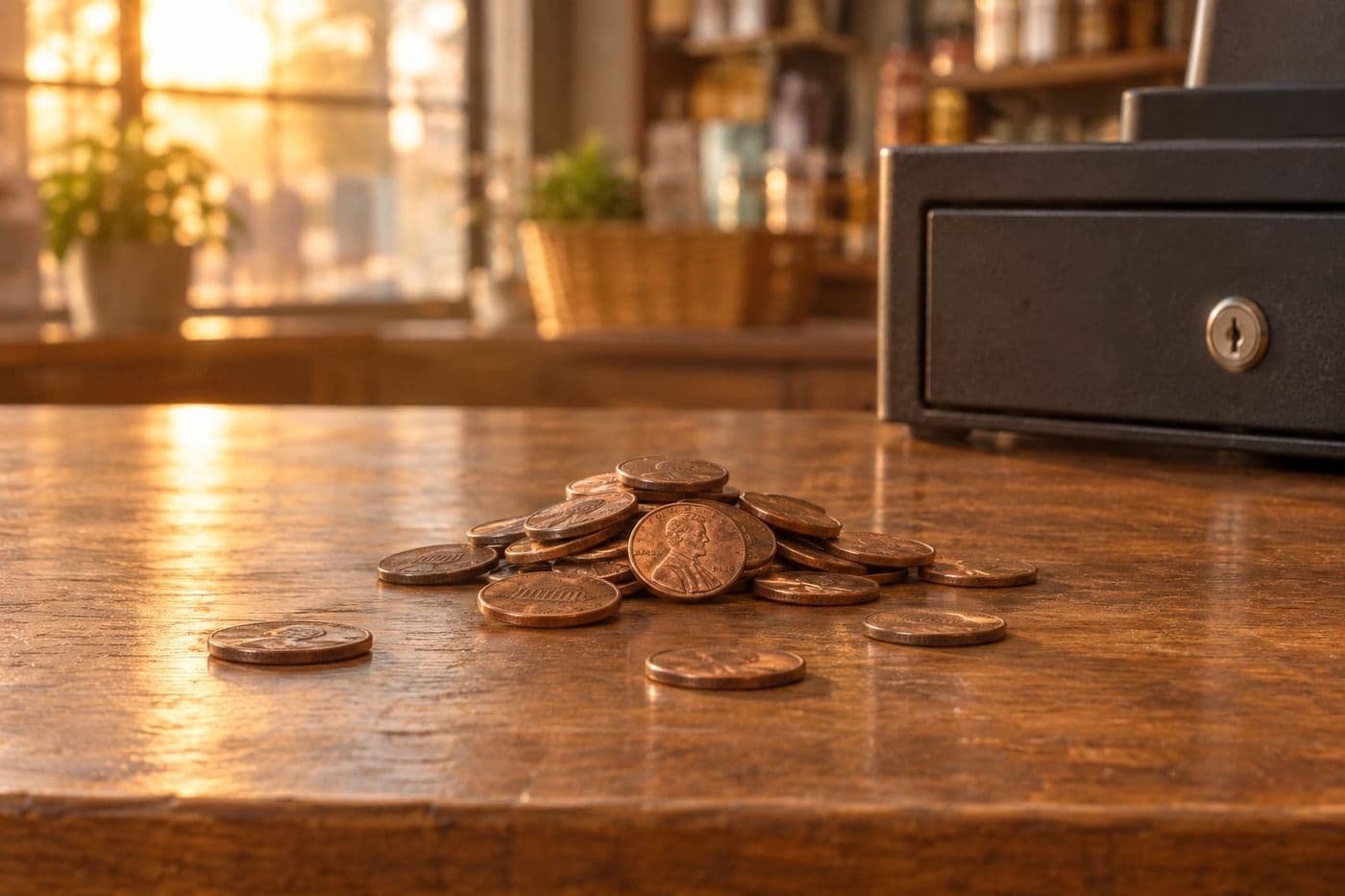
The United States has formally ended production of the one-cent coin, a piece of everyday American metal first struck in 1793 — a coin the Treasury says cost 3.69 cents to make in fiscal 2024, which means taxpayers lost money on every single one handed across a counter.
The decision to stop minting the penny traces to a directive from President Donald Trump to the Treasury Department, which runs the U.S. Mint. Trump argued publicly that the country had been minting a coin that cost more than it was worth, and he told the Treasury to stop. The numbers behind that argument are the Mint's own. In its fiscal 2024 annual report, the Mint said it cost 3.69 cents to produce and distribute each penny, up from 3.07 cents a year earlier. Across the roughly 3.2 billion pennies it made that year, the Mint reported a loss of about $85.3 million on the coin. The Mint's last pennies for circulation were struck at its Philadelphia facility in November 2025. It is worth being precise about what the order does. It ends new production. It does not pull existing pennies from circulation, and it does not strip them of legal tender status. Billions of the coins are already sitting in jars, drawers, cup holders and bank vaults, and they will keep working at the register. The practical question now is how businesses handle cash totals that no longer divide evenly by five.
The Mint's own figures show it cost 3.69 cents to make each one-cent coin in fiscal 2024, a loss of roughly $85.3 million on the coin that year.
America is not the first country to retire its smallest coin. Canada stopped distributing its penny in 2013, after the Royal Canadian Mint announced the end of production the year before. Canadian merchants adopted rounding on cash transactions to the nearest five cents, while card payments and other electronic payments continued to be charged to the exact cent. Australia and New Zealand dropped their smallest coins years earlier. The American debate is also long running. Critics have argued for decades that the metal costs more than the coin is worth, and the cost of zinc and copper has pushed the unit price up over time. Defenders, including some charities and convenience retailers, have raised concerns about rounding and about the coin's role in fundraising drives. Congress has weighed bills on the subject in various sessions without settling it. The cost per coin rose in the Mint's own annual reports, and that trend is what gave the argument its force.
There is a fair concern on the other side. Rounding can nick a shopper by a few cents, and nostalgia for the coin is real. Charities that lean on spare change also have a legitimate worry about what happens to their donation jars. Those concerns deserve a straight answer. But they do not outweigh the arithmetic. A government that spends more than three and a half cents to produce a one-cent coin is not running a currency program; it is running a subsidy for a habit. When a single line item loses tens of millions of dollars a year with no benefit to the public that cannot be handled another way, ending it is not radical. It is basic stewardship. Conservatives often say that if a program fails its own cost test, the burden of proof belongs to those who want to keep it. The penny had decades to make its case. The ledger did not help.
The 3.69-cent figure measures the Mint's full cost to produce and distribute a penny, including materials, manufacturing and delivery, not just the metal. It does not mean a penny contains 3.69 cents of zinc and copper. The loss figure is also not a bill sent to shoppers; it is the gap between what the Mint spends and what the coin is worth when it is put into circulation. Ending production does not make existing pennies worthless, and it does not require stores to refuse them. What changes is the supply of new coins. Cash prices may be rounded to the nearest nickel in places that choose to do so, while card prices stay exact.
Source:people.com
Everybody has a penny dish somewhere, the little tray by the door that collects coins no one wants to bend over for. The coin has been more tradition than tool for a long time, and the habit of leaving it behind at the register says what the market already decided. Honoring a piece of history does not require losing money on it year after year. Government is full of programs that outlived their usefulness because nobody wanted to be the one to say so. Here, someone finally did, and the coin that Abraham Lincoln's image made familiar leaves the mint with its dignity intact. Good policy sometimes just means doing the math. When it costs nearly four cents to make one, the penny has earned its retirement.