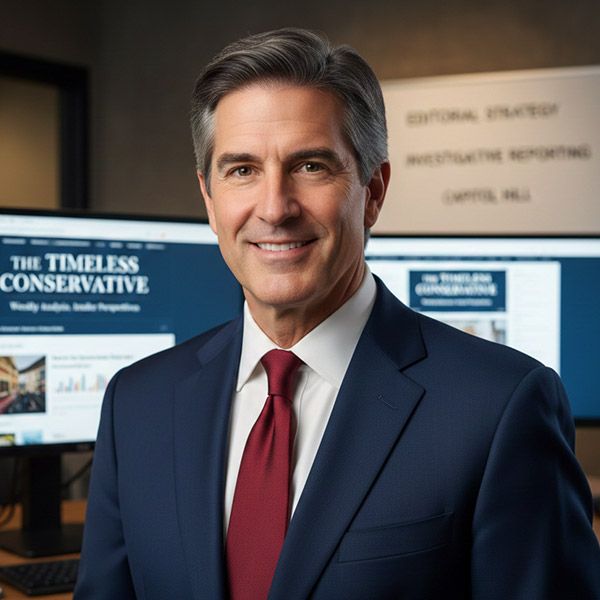

Nvidia’s board announced on Monday, Nov. 23, that it has reinstated co-founder Jensen Huang as CEO and president, less than two weeks after he resigned following an admitted affair with a woman the U.S. government suspects is a Chinese spy — a reversal that puts national security, corporate governance, and White House influence in the same frame.
The board’s decision was unanimous, according to the company’s announcement. Nvidia says it followed a series of discussions and meetings with Huang, after which directors were “satisfied with respect to Mr. Huang’s candor and ability to lead Nvidia.” The board also says it consulted senior U.S. government officials before concluding that Huang posed no national security risk. Huang resigned on Nov. 12 after acknowledging the affair. The woman involved is suspected by the U.S. government of being a Chinese spy. No criminal charge against Huang or the woman has been announced, and the spy suspicion remains just that: a suspicion. Board chair Harvey Jones said the board believes Huang “is the right person to lead Nvidia,” and that reinstatement serves the company’s stockholders, employees, partners, and customers. He thanked CFO Colette Kress for serving as interim CEO. She keeps her CFO duties. Huang said he takes the responsibility with “the greatest humility and renewed commitment.” He said he was honored to return to the company he co-founded in 1993, and he thanked the board, employees, shareholders, and his family. Markets reacted fast. Nvidia stock rose 27% in pre-market trading on Nov. 23, and shares closed up 31%, according to CNBC figures cited in the research.
“The Board believes Jensen is the right person to lead Nvidia, and that his reinstatement is in the best interests of our stockholders, employees, partners and customers.” — Nvidia board chair Harvey Jones
The reversal did not happen in a vacuum. Nvidia’s board had formed an independent committee and hired the law firm Wachtell, Lipton, Rosen & Katz to examine whether company secrets or national security were compromised. The outcome of that review has not been made public. President Trump has repeatedly voiced support for Huang. On Truth Social, he wrote that the board “made the correct and proper decision to return” Huang. He also told CNBC he had spoken to the board “directly and indirectly” and that Huang “did nothing wrong.” Trump had earlier called Huang “a fine person.” Pressure came from the business world too. Hundreds of Silicon Valley executives, including Elon Musk, urged the board to reconsider. Huang and directors held their first talks since his departure on Saturday and settled on his return at a second meeting on Sunday, according to people familiar with the matter. Anonymous sources familiar with U.S. intelligence told ABC that the woman, a former Megaspeed executive, was in contact with an official at China’s Ministry of State Security from spring 2025 to fall 2026. Those are unconfirmed claims.
There is a fair case for Nvidia’s decision. Huang built the company over three decades, shareholders have a real stake in stable leadership, and a private affair is not a crime. If federal officials truly found no security risk, the board was right to weigh that heavily. But the public deserves more than assurances. Nvidia designs chips at the center of the U.S.-China technology contest, and the question was never only about personal conduct. It was whether a relationship with a person under suspicion exposed sensitive information. A board that consults government officials and then reinstates its leader within days owes shareholders and taxpayers a clear explanation of what was reviewed and what was found. Speed is not proof. A 27% pre-market surge reflects investor relief, not an investigation’s conclusion. And when a sitting president publicly lobbies a private board, Americans should ask whether decisions of this weight are being made on evidence or on influence. Accountability should not depend on market capitalization.
Two things are easy to confuse here. First, “suspected” is not “charged.” No source reports criminal charges against Huang or the woman, and the intelligence claims come from unnamed people, not from any filing or court record. Second, the board’s finding that Huang posed no national security risk is the company’s statement, based on its own consultations, not a published government finding. The stock gains also measure investor sentiment about leadership continuity, not whether the Wachtell review reached a conclusion. Reports of a separate relationship with another Nvidia employee, which Nvidia declined to comment on, remain unconfirmed.
Source:people.com
Think of a bank vault whose manager is caught giving a stranger the combination, then is handed the keys back within two weeks because the customers cheered. Maybe the manager is trustworthy. Maybe the lock was never compromised. But a vault is only as secure as the public’s ability to check. Nvidia’s board says it did its homework and the markets agree. Shareholders can take comfort in a 31% pop. Citizens should want the receipts. Trust is earned in the open, not announced on a Monday.