
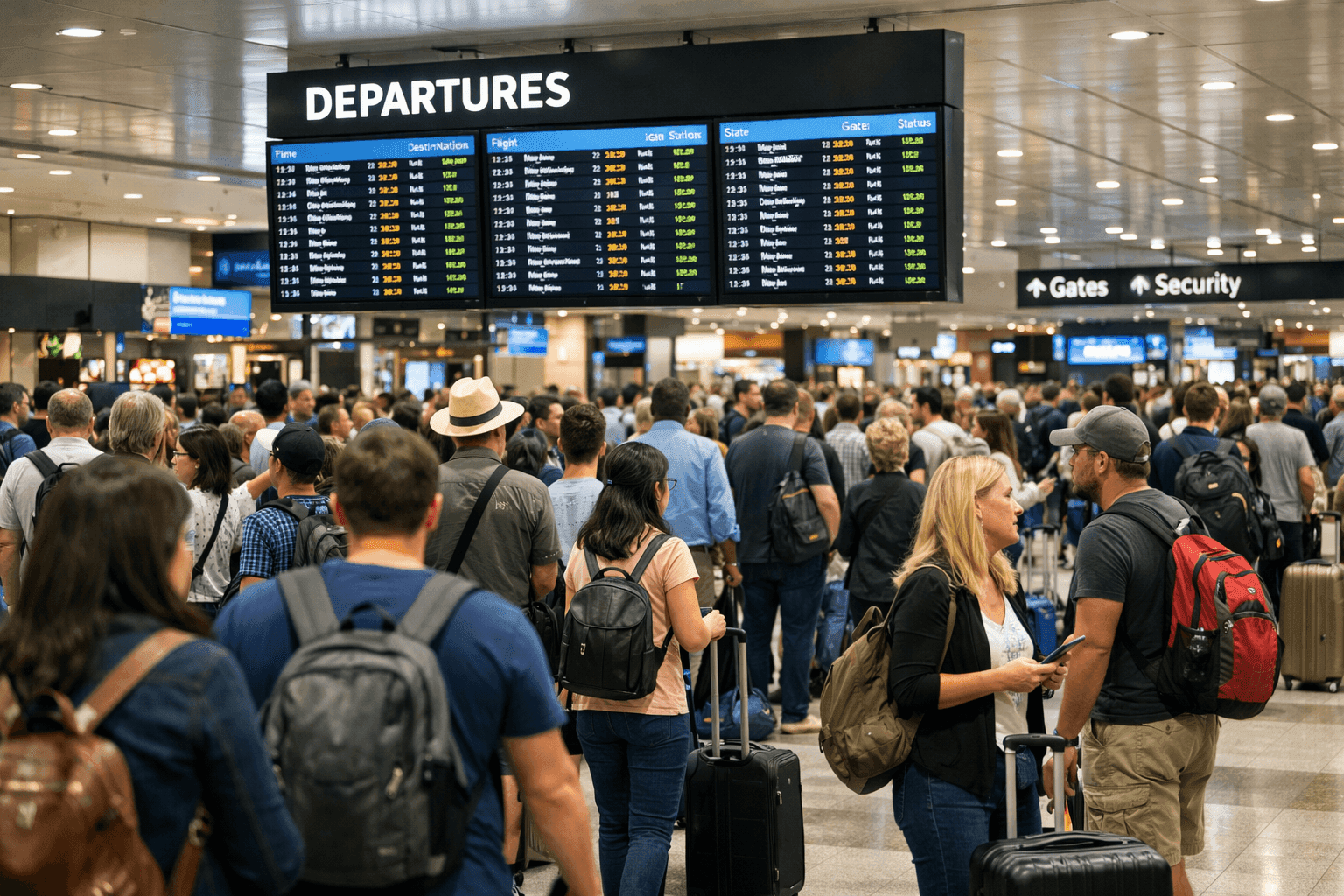
United States airlines are preparing for one of the busiest spring travel seasons on record with an estimated one hundred seventy-one million passengers expected between March 1st and April 30th, marking a four percent increase over last year's numbers.
Airlines for America projects carriers will handle approximately two point eight million passengers daily during this period, prompting airlines to add routes and boost capacity with about twenty-six thousand flights departing each day and close to three point five million seats available across the industry.
The surge reflects Americans' continued willingness to prioritize travel experiences despite economic uncertainties and elevated costs compared to pre-pandemic levels. Conservative economic observers note this demonstrates relative prosperity among middle and upper-income households who can absorb higher airfares and vacation expenses, though working-class families increasingly find travel beyond their budgets.
"U.S. airlines are ready for the travel rush this spring, with 171 million travelers expected as Americans prioritize experiences and carriers add capacity to meet growing demand."
Airlines for America president and CEO Chris Sununu expressed confidence that carriers stand ready for the spring rush, though passengers may experience crowded airports, full flights, and limited schedule flexibility during peak travel days. The industry has recovered from pandemic disruptions that decimated passenger volumes and forced major operational adjustments.
Spring break travel traditionally represents one of the busiest periods for domestic aviation as families with school-age children take advantage of coordinated breaks and warmer weather destinations. Airlines strategically add capacity and adjust pricing to capture maximum revenue during these predictable demand surges.
The projected passenger volumes suggest economic resilience among Americans who retain discretionary income for travel despite inflation concerns and economic uncertainty. However, the four percent growth rate remains modest compared to explosive post-pandemic recovery years, possibly indicating travel demand is normalizing after extraordinary pent-up desire following COVID restrictions. Airlines benefit from strong demand that supports higher fares and fuller flights, though passengers face the downside of reduced flexibility and elevated costs. The spring travel surge demonstrates that Americans still value experiences and family vacations enough to absorb premium pricing, at least among demographic segments with sufficient disposable income to participate in leisure travel markets.