
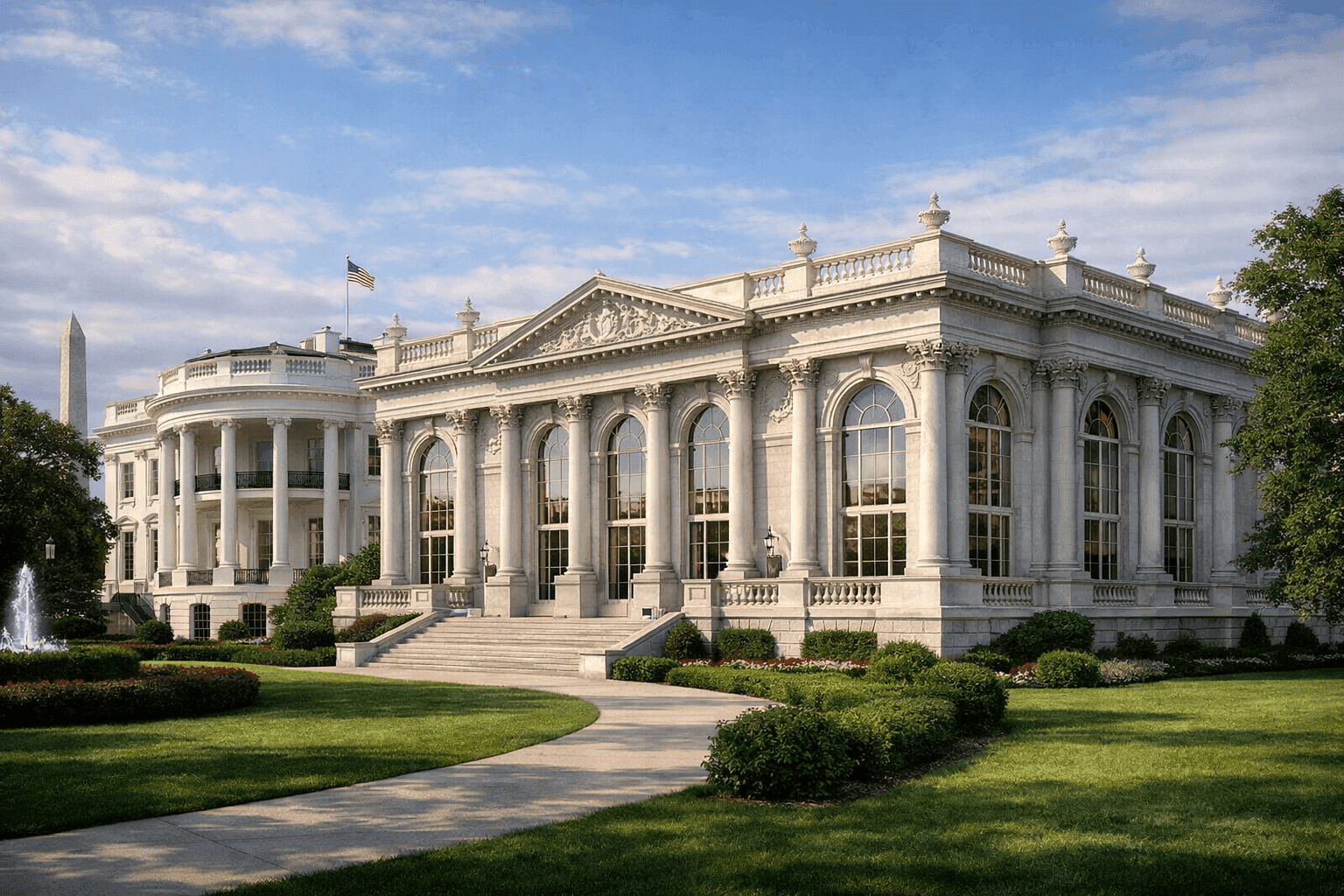
The United States Commission of Fine Arts has approved President Trump's proposal to construct a four hundred million dollar ballroom larger than the White House itself on the former East Wing site, advancing a controversial project that preservation groups have sharply criticized.
The estimated cost would more than triple dining seating capacity for state functions and diplomatic events. Chairman Rodney Mims Cook Junior moved Thursday's scheduled design review meeting directly to final approval voting, with six of seven Trump-appointed commissioners voting favorably twice. Commissioner James McCrery abstained due to his previous role as the project's architect.
Conservative fiscal watchdogs express concerns about the four hundred million dollar price tag during a period when federal deficit reduction supposedly represents a priority. While enhanced state dining capacity might serve legitimate diplomatic functions, the scale and cost raise questions about whether this represents necessary infrastructure improvement or Trump's preference for grandiose construction projects that serve his personal brand more than genuine government needs.
"The estimated $400 million ballroom would more than triple dining seating capacity, replacing the former East Wing with a structure larger than the White House itself."
Preservation organizations argue the massive addition will overwhelm the White House's historic proportions and architectural character. The building has served as the executive residence for over two centuries with only modest expansions that respected its iconic design. Constructing a ballroom exceeding the mansion's footprint represents dramatic departure from careful stewardship that previous administrations maintained regardless of party affiliation.
The Commission of Fine Arts reviews designs for federal buildings and monuments in Washington to ensure architectural quality and historical appropriateness. Trump appointed all current commissioners since January, creating a board certain to approve his proposals regardless of merit or preservation concerns that might have troubled previous commissions with more diverse appointment histories.
The rapid approval process bypassing normal deliberative stages raises legitimacy questions about whether this represents genuine architectural review or rubber-stamping predetermined outcomes. Trump's complete control over commission membership through recent appointments essentially guarantees approval for whatever designs he prefers regardless of cost, appropriateness, or preservation impact. While presidents deserve some latitude regarding executive residence modifications, a four hundred million dollar structure dwarfing the White House itself pushes far beyond reasonable updates into territory where personal aggrandizement overtakes institutional respect. Future presidents may regret this precedent if they inherit a massive ballroom that serves Trump's ego better than the nation's diplomatic requirements.