

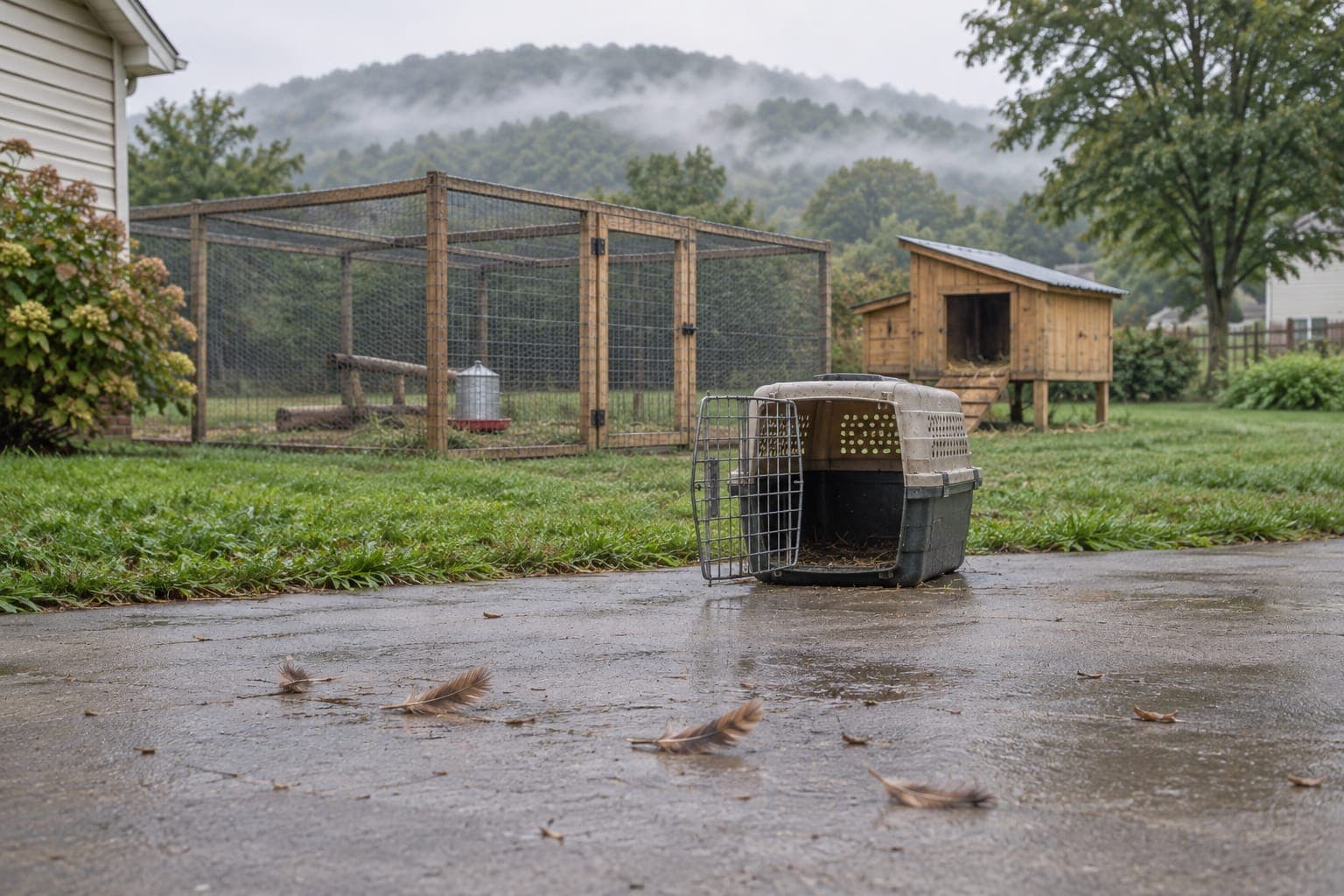
An adult female red-shouldered hawk found on a driveway in Roanoke, Va., was grounded for one simple reason — at 910 grams, or a little over 2 pounds, she was too fat to fly after feasting on neighbors' free-roaming chickens, wildlife rehabilitators say, a funny story with a serious warning about feeding wildlife.
The Southwest Virginia Wildlife Center of Roanoke took in the bird, catalogued as RSHA 26-2599, after she was found on a driveway about a mile from the center. She could not fly. Staff went looking for the usual culprits. They checked for broken bones, lead toxicity, eye problems, head trauma, emaciation, and bruising from a collision or a fight. Everything came back normal. The only abnormal finding was her weight. At 910 grams, she was well above the typical range for her species. Staff could not even feel her keel, the ridge of the breastbone that rehabilitators use to judge a bird's condition, because fat covered it. The center's diagnosis was blunt: she was “too darn fat to fly.” Staff then wondered whether she was a lost falconry bird, was being fed by a person, or was an escaped, illegally kept captive hawk. So they asked the finder a question about the neighborhood. Weeks later the finder answered that the neighbors' free-roaming chickens had been “disappearing at an alarming rate over the last few weeks.” The center's conclusion was simple. Each morning the chickens were let out, and she took one when she was hungry. After weeks of that routine, she was too heavy to get off the ground.
“This is a man-made issue, and this could have had a sadder ending if she had been found by a larger predator instead of the finder.” — Southwest Virginia Wildlife Center
The center described its hawk as “picking off the buffet of easy prey set out before her, eating her fill, and then snoozing in the trees nearby until she was ready to eat again.” That is the heart of the problem. A wild raptor is built to hunt hard for every meal, and a daily, predictable food supply removed the work. The center said that without flight she is extremely vulnerable, which is why it treats the story as serious even though it is funny. Its message to the public is not to feed wildlife, directly or indirectly, and it says covered runs may be best for people who keep backyard chickens. Her care plan is straightforward. Staff restricted her food to keep her in a calorie deficit and gave her daily exercise. Katherine McGrath of the center said staff were “delighted” with their guest. A later update posted by the center said she lost about 130 grams, or 4.6 ounces, in a little over a month and is starting to fly once again. The plan is to release her near where she was found once she sheds the weight, though there is a slight risk she could rediscover the chickens.
Let's be fair to the chicken owners. Nobody sets out to fatten a hawk, and keeping birds free-range is a long, legitimate tradition. Nor is the hawk a villain. She did exactly what nature built her to do when a meal was handed to her. The lesson is about incentives. When people create an easy, unprotected food supply, wild animals respond predictably, and the animal pays the price. The fix here costs almost nothing: a covered run, a latch, and a little foresight. No new regulation is needed, no task force, no grant program. Responsible property owners can solve this problem on their own, which is how local problems are usually best solved. It is also a reminder that good intentions and good outcomes are different things. Feeding wildlife, even by accident, feels harmless until it leaves a wild bird stranded on a driveway. Common sense, applied early, beats expensive rehabilitation applied late.
The center says it was a red-shouldered hawk, a medium-sized raptor, and that her weight was the one abnormal finding. A bird's keel, the breastbone ridge, is how rehabilitators judge body condition. In a healthy bird it is easy to feel, and in an emaciated one it is sharp. Here it was buried under fat. Published figures for a typical female's weight vary, so the clearest takeaway is not an exact percentage over normal. It is that 910 grams was far above what is expected for the species. The center also says her case was a nutrition problem, not an injury or illness, which is why diet and exercise were enough to put her on the road back to flight.
Source:Grounded bird of prey deemed 'too fat to fly' after endless feasting, sleeping in Virginia
Think of the buffet that is so good you swear you will only have one plate. Then comes the second plate, then the nap. The hawk simply took that to its logical end, with free chicken delivered each morning and a branch nearby for sleeping it off. Her story is funny, and the center is right to let people laugh. But the takeaway is plain. Wild animals do best when they stay wild, and people do best when they take responsibility for what they leave out. Cover the coop, skip the handouts, and let the hawk earn her dinner. A raptor that cannot fly is just a very expensive lawn ornament.