
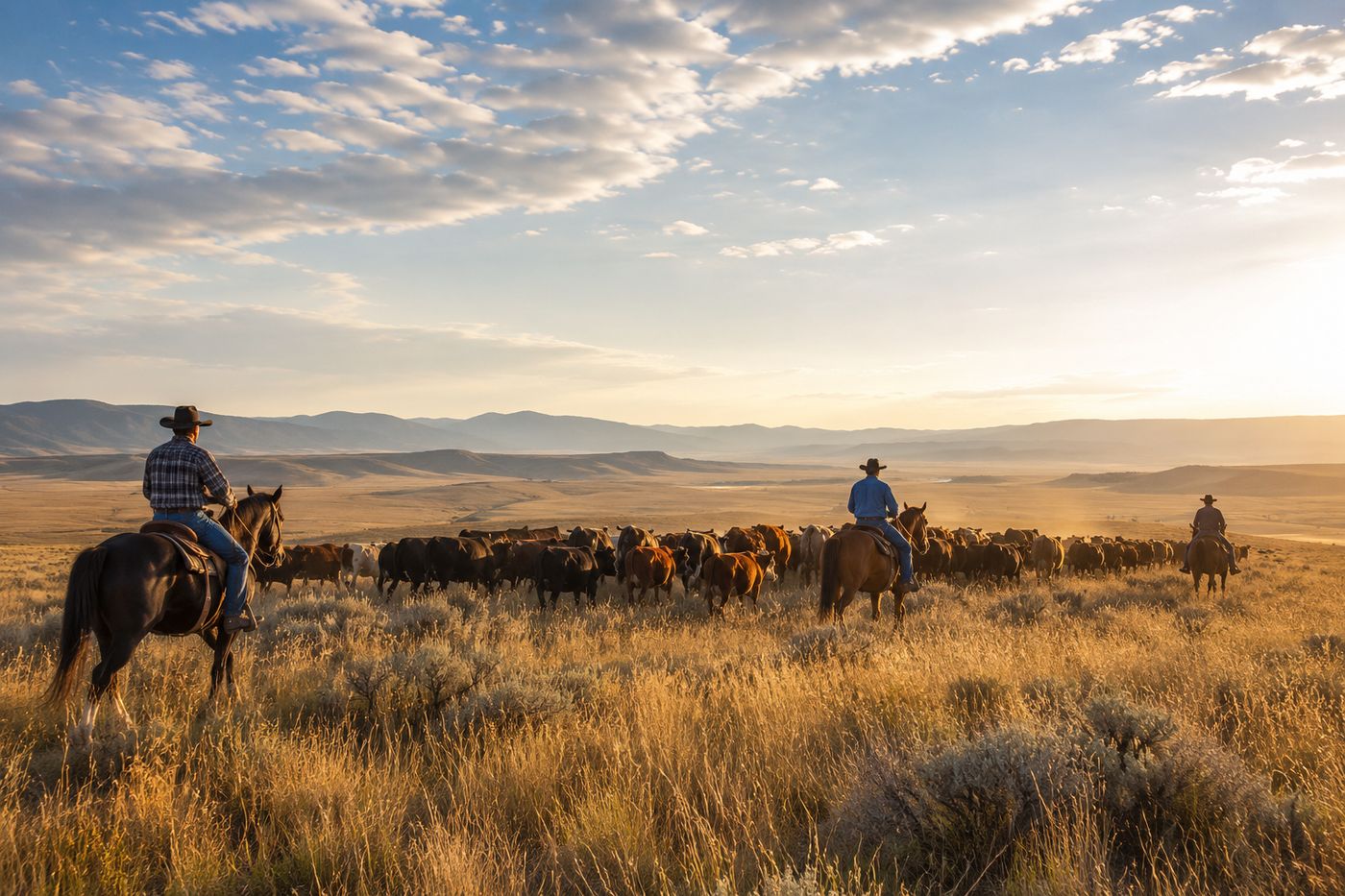
President Trump announced Friday that he is authorizing legal action to give American ranchers the right to process and sell their own beef — directly challenging what he called a "nasty monopoly" held by four meatpacking conglomerates that control roughly 85% of U.S. beef processing capacity — as ground beef prices hit a record $6.89 per pound and the administration escalates a multi-front war on food inflation ahead of November midterms.
The Big Four meatpackers — Tyson Foods, Cargill, JBS, and National Beef — have faced a Justice Department antitrust investigation since November 2025, when Trump directed DOJ to examine whether the companies were using their market dominance to manipulate cattle pricing benchmarks, squeeze ranchers on the buy side, and inflate consumer beef prices on the sell side. The Wall Street Journal reported the probe is examining how packers purchase cattle through contracts tied to a pricing benchmark that some ranchers say is manipulated to their disadvantage. Friday's announcement of rancher processing rights is designed to give producers an alternative to the packers' system entirely — a move Agriculture Secretary Brooke Rollins said would be accompanied by additional actions announced Monday to reduce red tape for small processors and expand ranchers' ability to sell beef across state lines. Trump separately announced a 90-day suspension of tariffs on imported ground beef, aiming to bring consumer prices down while the longer-term structural fix is implemented.
"We will always protect our American Ranchers, and they are being blamed for what is being done by Majority Foreign Owned Meat Packers, who artificially inflate prices, and jeopardize the security of our Nation's food supply." — President Donald Trump, Truth Social
The politics of the beef price crisis are complicated. The structural driver of high beef prices is a cattle herd that has reached its smallest size in 75 years — the result of years of severe drought, rising feed costs, and ranchers liquidating herds when financing was cheap and markets incentivized it. The 2025 calf crop was a second consecutive record low, and the American Farm Bureau Federation projects further declines in 2026 and 2027 with no meaningful herd recovery until at least 2028. These are supply dynamics no executive order can fix in the near term. The meatpacker investigation addresses whether the Big Four have additionally exploited the supply crunch to widen margins at ranchers' and consumers' expense — a separate but compatible grievance. Cattle rancher groups, however, reacted with alarm to the tariff suspension on imported beef, arguing that adding foreign supply to a tight domestic market will depress the cattle prices they have spent years rebuilding to profitable levels.
Tyson Foods shares fell more than 2.5% Friday alongside JBS on the announcement. Tyson had already guided for beef segment adjusted operating losses of $500 million to $650 million in fiscal 2026 before the packer scrutiny intensified. Analysts note that in the near term, increased regulatory pressure on the Big Four may squeeze processor margins further without immediately reducing consumer prices — since the cattle shortage, not processor profit-taking, is the primary driver of high ground beef costs. The administration's stated goal of bringing prices down 25% before the midterms through a foreign import deal was not accompanied by specifics on which country the imported beef would come from.
The four companies Trump is targeting collectively control approximately 80-85% of U.S. beef packing capacity. JBS, the world's largest meatpacker, is owned by Brazilian interests. Cargill is privately held by an American family. Tyson Foods and National Beef are publicly traded. Under existing USDA rules, ranchers can process and sell beef directly to consumers but face significant restrictions on interstate sales of meat processed in facilities that lack full federal inspection — the regulatory barrier the Trump executive action is designed to reduce. The legal details of the proposed change had not been released as of Friday evening.
President Trump's instinct to take on the meatpacking oligopoly is correct, and American ranchers have spent decades warning that four companies controlling most of the country's beef processing creates the conditions for exactly the kind of price manipulation the DOJ is now investigating. The harder truth is that no combination of executive actions — antitrust probes, rancher processing rights, tariff suspensions, import deals — can rebuild a cattle herd in months. Relief for consumers and ranchers will require sustained policy across a full herd cycle. Trump is making the right fight. Whether he can win it before November, or even before 2028, is a different question entirely.