
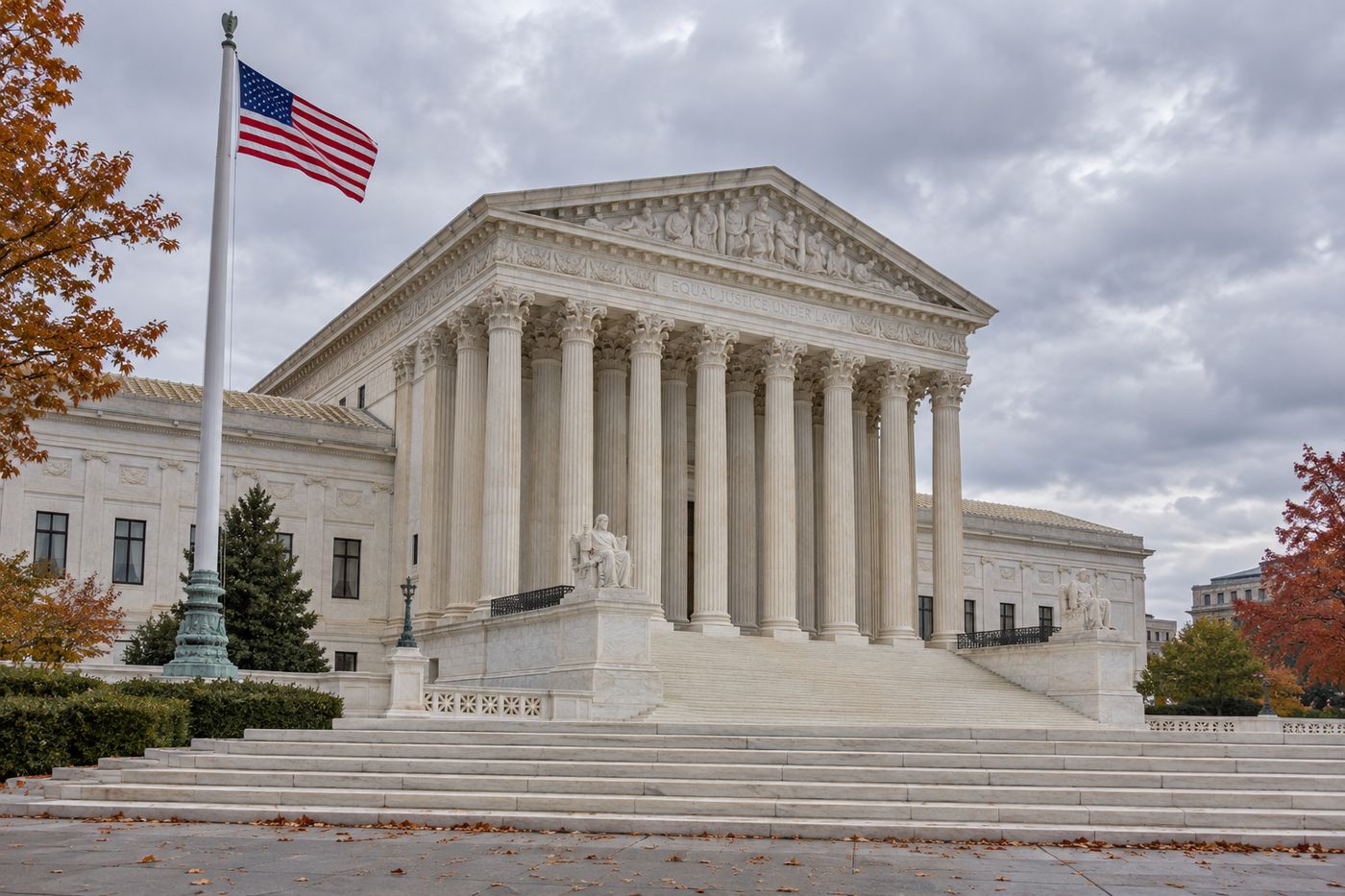
The Supreme Court on Wednesday declined to allow the Trump administration to immediately enforce a Bureau of Prisons policy ending hormone therapy and certain other medical interventions for transgender federal inmates — leaving in place a lower court injunction that has blocked the policy since earlier this year, in an unsigned order in which only Justices Samuel Alito and Clarence Thomas would have sided with the administration.
The policy at issue was adopted pursuant to President Trump's executive order directing federal agencies to implement what the administration describes as policies consistent with the recognition of only two biological sexes. Under the Bureau of Prisons' new program statement, transgender inmates would have received only mental health services — including counseling and antidepressants — with hormone therapy, surgical procedures, and other gender-related medical interventions discontinued. The policy was challenged in court by a group of transgender inmates represented by the ACLU, who argued that it violated their constitutional rights and constituted cruel and unusual punishment under the Eighth Amendment. U.S. District Judge Royce Lamberth blocked the policy, concluding that the Bureau of Prisons had failed to adequately explain why years of providing hormone therapy — which it had offered to transgender inmates for approximately three decades — were now being reversed. A divided D.C. Circuit panel left the block in place, finding that the government had cited "zero evidence from its own medical or mental health professionals" to support its conclusions.
"The government has not detailed evidence of security problems linked to hormone therapy for transgender inmates over the 30 years it has been provided." — D.C. Circuit Court of Appeals, in the ruling that the Supreme Court declined to reverse
The administration's emergency appeal to the Supreme Court argued that the policy was necessary to "maintain institutional security" and that the courts were engaging in an "egregious intrusion into federal prison administration." Solicitor General D. John Sauer argued that the Bureau of Prisons had "seasonably considered its prior experience" and determined both that the interventions were not medically necessary and that security and administration concerns independently justified the change. The Supreme Court's majority — including the court's four liberal justices and presumably several conservative justices — declined to accept that argument without more process, leaving the lower court injunction in force while the underlying case proceeds. Wednesday's order is a procedural loss for the administration, not a final ruling on the merits of the policy itself.
The ruling is notably more circumscribed than the Trump administration's prior wins on transgender policy at the Supreme Court. Earlier this year, the court allowed a ban on transgender military service to take effect. Last year it upheld state laws restricting gender transition treatments for minors. The transgender athletes case — in which the court allowed state bans on transgender women and girls competing in female sports to remain in effect — was decided in June. The prison policy case is different in one significant respect: the policy reverses a practice that federal courts found had been in place for three decades without evidence of the security problems the administration cited as justification. That absence of evidence is what both the district court and the circuit panel pointed to, and it is what distinguished this case from the administration's successful challenges elsewhere.
There are approximately 1,000 transgender inmates in federal custody. At the time the policy was challenged in court, approximately 600 of them were receiving hormone therapy. The case will now continue in the lower courts, with the injunction remaining in place until the underlying litigation is resolved or the Supreme Court takes up the case on the merits in a future term. The administration may revise its policy documentation and refile — addressing the administrative process failures identified by the courts — before seeking emergency relief again.
The Supreme Court's rejection of the administration's emergency application is a setback, not a defeat. The court did not rule the policy unconstitutional — it ruled that the lower court's injunction should remain in place because the government had not adequately explained the reversal of a three-decade practice. If the administration wants to prevail on this question, the path forward is to build a proper administrative record with medical and security evidence, go through the formal rulemaking process, and return to the courts with a policy grounded in something more than an executive order's declaration. That is a harder path than an emergency application. It is also the correct one.