
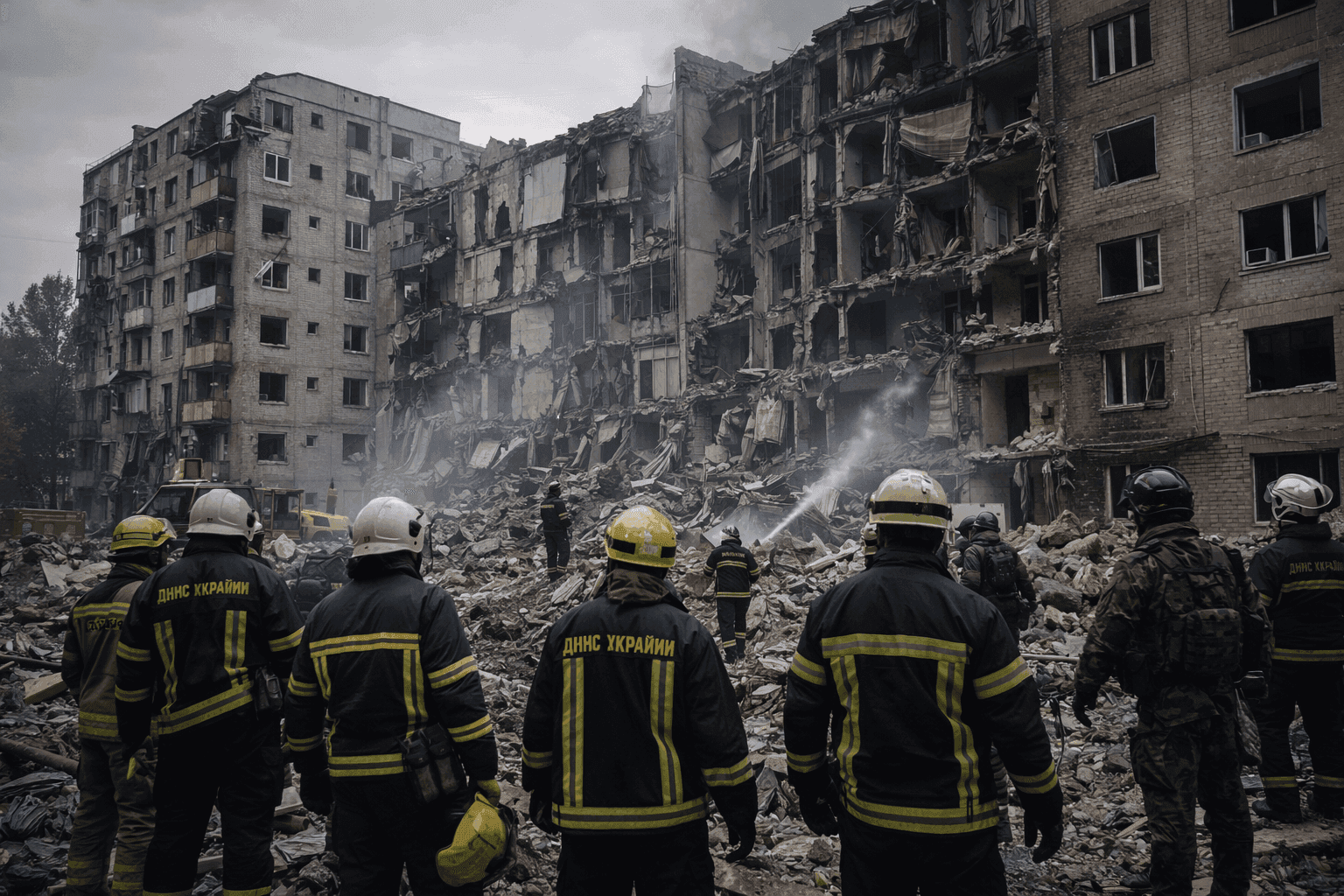
Russian drone attacks killed four people overnight including two women and a toddler in Ukraine's southern port city of Odesa, authorities reported Monday, while Ukrainian long-range drones targeted Russia's key Black Sea oil export facilities in continuing strikes over four years into the invasion.
Russia has relentlessly pounded Ukrainian civilian areas since invading its neighbor, killing more than fifteen thousand people according to United Nations documentation. President Zelenskyy reported that over the past week alone, Russia launched more than twenty-eight hundred attack drones, nearly thirteen hundred fifty powerful glide bombs, and over forty missiles of various types against Ukrainian targets.
"Four years of Russian aggression against Ukraine demonstrates that appeasement and half-measures fail against determined authoritarian expansion. Western support must continue until Ukraine can secure its sovereignty or risk emboldening further Russian territorial ambitions."
In the southern city of Kherson, Russian shelling killed an elderly woman while hospitalizing three others aged eighty-six, seventy-nine, and forty-four with shrapnel wounds, concussions, blast injuries, and head trauma. Seven people suffered injuries from Russian drones and shelling in Nikopol, leaving a sixty-two-year-old in critical condition as strikes damaged a multistory building and pharmacy. Drones also hit Kharkiv, Ukraine's second-largest city, injuring three people.
Conservative perspectives on the Ukraine conflict recognize that Russian aggression threatens European stability and international norms against territorial conquest. However, opinions diverge on whether continued American military aid represents vital strategic investment or unsustainable commitment without clear victory conditions. The conflict's prolonged nature raises legitimate questions about achievable outcomes and whether current strategies will produce decisive results or simply extend stalemate indefinitely.
The war has devastated Ukrainian cities and displaced millions while inflicting substantial casualties on both sides. Ukrainian forces have demonstrated remarkable resilience against numerically superior Russian forces, though territorial gains remain limited and the conflict shows no signs of imminent resolution despite years of intensive combat.
The ongoing civilian casualties from Russian attacks demonstrate the brutal character of this conflict and why Western support for Ukrainian defense remains morally justified. However, American policymakers must honestly assess whether current strategies will achieve acceptable outcomes or whether the war requires diplomatic initiatives alongside military aid. Ukrainian civilians deserve protection from Russian aggression, but Americans also deserve clarity about what their continued support is intended to accomplish and whether those objectives remain achievable given battlefield realities.