
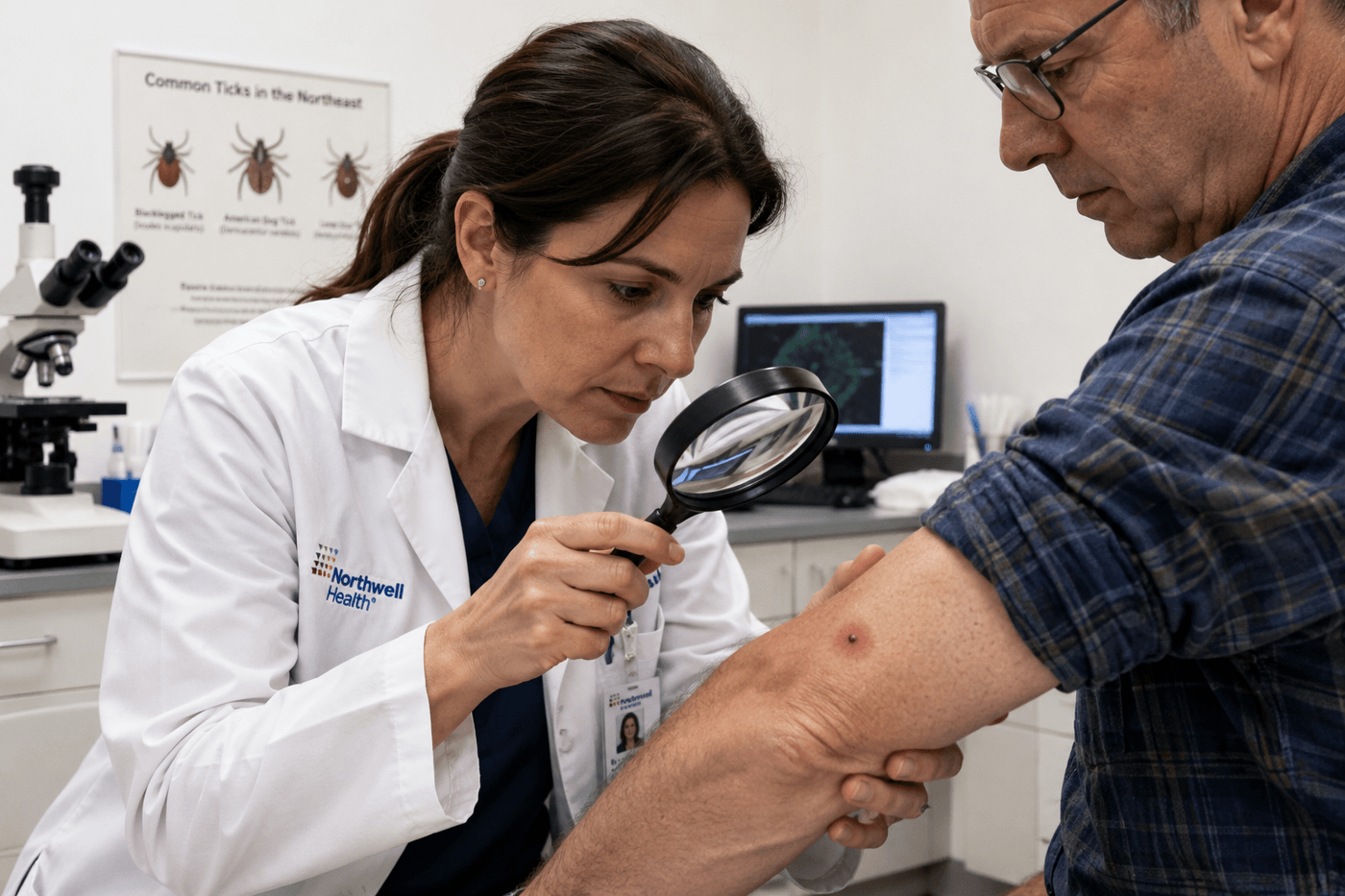
A rare tick-borne virus that can progress from exposure to fatal brain swelling in a matter of hours recorded its highest annual case count in American history in 2025, with the CDC logging 76 confirmed diagnoses — nearly ten times the historical average — and public health officials warning the numbers are likely to climb further as tick habitats expand.
Powassan virus, named for the Ontario town near where it was first identified in a 1958 case involving a four-year-old Canadian boy named Lincoln Byers, is transmitted to humans through the bite of an infected woodchuck tick or deer tick. What makes it uniquely dangerous among tick-borne pathogens is its transmission speed: while Lyme disease typically requires a tick to be attached for 36 to 48 hours before transmission occurs, Powassan can be transmitted in as little as 15 minutes. Once the virus enters the bloodstream, it can cause encephalitis — dangerous inflammation of the brain — and roughly one in ten infected patients who develop neurological symptoms will die. Another 50% of survivors experience permanent neurological damage including recurring headaches, muscle wasting, and memory problems.
"Powassan is not like Lyme disease. You don't have hours or days to remove a tick. The window for transmission is minutes, and once you have neurological symptoms, treatment options are limited." — Public health warning from infectious disease specialists
There is currently no approved vaccine or antiviral treatment specifically for Powassan virus. Clinical management is supportive, meaning doctors treat symptoms rather than the virus itself, and severe cases require hospitalization in an intensive care unit. The virus is most prevalent from late spring through mid-fall, coinciding with peak tick activity and peak outdoor recreation in the regions where it circulates most actively — primarily the upper Midwest, the Great Lakes region, and the Northeastern United States. Confirmed cases have been reported in at least 25 states, with the highest concentrations in Minnesota, Wisconsin, Maine, and New York.
The dramatic rise in annual case counts — from a historical average of seven to eight per year to 76 in 2025 — has alarmed public health officials who note that Powassan almost certainly remains substantially underdiagnosed. Many infected individuals may experience mild symptoms or none at all, and the virus is not routinely tested for in standard tick-borne illness panels. As deer populations grow and tick habitats push into previously unaffected areas, experts expect that trend to continue regardless of whether diagnostic awareness improves.
Prevention remains the only reliable defense against Powassan virus. The CDC recommends using EPA-registered insect repellents, wearing long sleeves and pants in wooded or grassy areas, treating outdoor clothing with permethrin, and conducting full-body tick checks after any time spent outdoors. Ticks should be removed promptly using fine-tipped tweezers. Any tick bite followed by fever, headache, vomiting, weakness, confusion, or seizures within one month should be evaluated by a physician immediately.
Powassan virus has spent sixty years as an obscure medical footnote. The 2025 case count suggests that era is ending. For families spending time outdoors this summer — hiking, camping, gardening, or simply playing in the yard in tick country — the practical message is simple and worth repeating: check for ticks every time, don't wait to remove them, and know the symptoms. There is no treatment waiting on the other end. There is only prevention.