
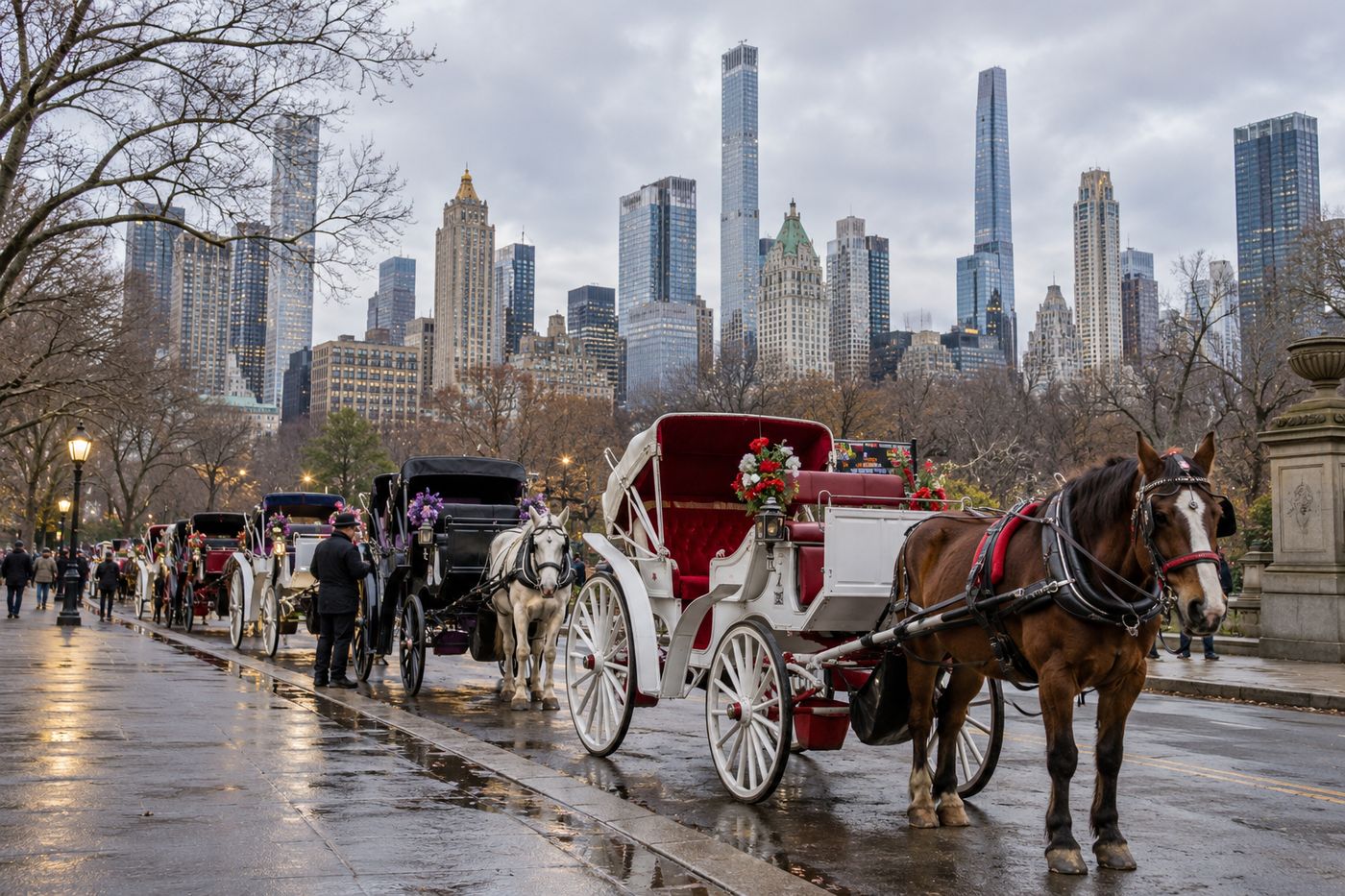
The New York City Council is scheduled to vote Wednesday on Romanch's Law — legislation that would permanently ban horse-drawn carriage operations in New York City by June 1, 2028, ending a 168-year tradition that has defined Central Park's tourist experience since before the Civil War, and that Mayor Zohran Mamdani, City Council Speaker Julie Menin, and a majority of the Council's 51 members have aligned behind following a deadly summer that saw a carriage horse collapse and die and an 18-year-old tourist killed when a spooked horse threw him from a runaway carriage.
The legislation is named for Romanch Mahajan, the 18-year-old Indian tourist who died in June after a carriage horse bolted in Central Park and overturned the vehicle. His death — the second carriage-related fatality on the park's loop since June — accelerated legislation that advocates have been attempting to pass through successive mayoral administrations since 2010. Mayor Bill de Blasio pledged a ban "on day one" in 2013 before failing to deliver it. Mayor Eric Adams called for a ban and even signed an executive order in September 2025 preparing city agencies for eventual legislation — before losing the Democratic primary to Mamdani. Under the deal Mamdani struck with Speaker Menin on October 13, the legislation includes provisions requiring the "humane disposition" of the approximately 70 horses currently in the industry — forbidding their sale for slaughter or transfer to other carriage operations. It also includes financial assistance for carriage drivers and medallion owners facing economic displacement. Twenty-nine of the Council's 51 members are co-sponsors.
"Next week, the NYC Council will take a historic vote to end the horse carriage industry in Central Park with a plan to protect workers, provide a humane future for the horses, and create a safer environment for park goers." — Council Speaker Julie Menin, October 13, 2026
The ban has drawn fierce opposition from the Transport Workers Union — which represents the approximately 300 drivers employed by the carriage industry — and from carriage operators who announced plans to challenge the legislation in court on constitutional grounds. Drivers rallied outside the Central Park entrance on West 57th Street and Seventh Avenue Friday, drawing a parallel to another blow New York's working class absorbed a decade ago: the medallion debt crisis that devastated thousands of taxi drivers when app-based ride-sharing undercut the value of the medallion licenses they had financed at inflated prices. Ironically, Mamdani — who once joined a 15-day hunger strike in solidarity with indebted taxi drivers — is now passing legislation that opponents say will devastate another class of transportation workers, albeit with a more robust transition package than the taxi medallion situation received.
The horse carriage industry has operated in New York City since the 1850s. The horses — typically Percherons, Belgians, and Standardbreds — live in stables on the far west side of Manhattan and work shifts of no more than nine hours in Central Park under regulations that restrict their use during high-temperature days. Animal welfare advocates have argued for years that working horses in a dense urban environment with vehicle traffic, asphalt, and noise is inherently stressful and inhumane. Industry defenders counter that New York's carriage horses are among the most regulated and monitored working animals in the world, receive excellent veterinary care, and are often rescues that would face uncertain futures without the industry.
Romanch's Law takes effect June 1, 2028, giving the industry approximately 20 months to wind down operations, rehome horses, and complete the financial transition process for affected workers and medallion owners. The bill forbids selling horses to slaughter or to other carriage operations but does not specify approved destinations — animal welfare organizations, farms, and sanctuaries are the presumed alternatives. The Central Park Conservancy, which manages the park, issued its first-ever public support for a carriage horse ban last year. Carriage operators have retained legal counsel and indicated they intend to file suit challenging the legislation on multiple grounds.
Horse-drawn carriages in Central Park are a 168-year-old piece of New York City's living history. Whether they are also an anachronism that belongs in that history rather than on its streets is a question that New Yorkers have been debating for a decade without resolution, and that Wednesday's Council vote will now answer definitively in the affirmative. The deaths of an 18-year-old tourist and a horse that collapsed on a Manhattan avenue provided the political momentum that years of advocacy could not. Romanch Mahajan's family will observe Wednesday's vote from a distance. The 70 horses of Central Park will spend their retirement somewhere other than West 57th Street. Whether that constitutes a good outcome depends almost entirely on what you think a city owes to tradition, to workers, and to animals.