
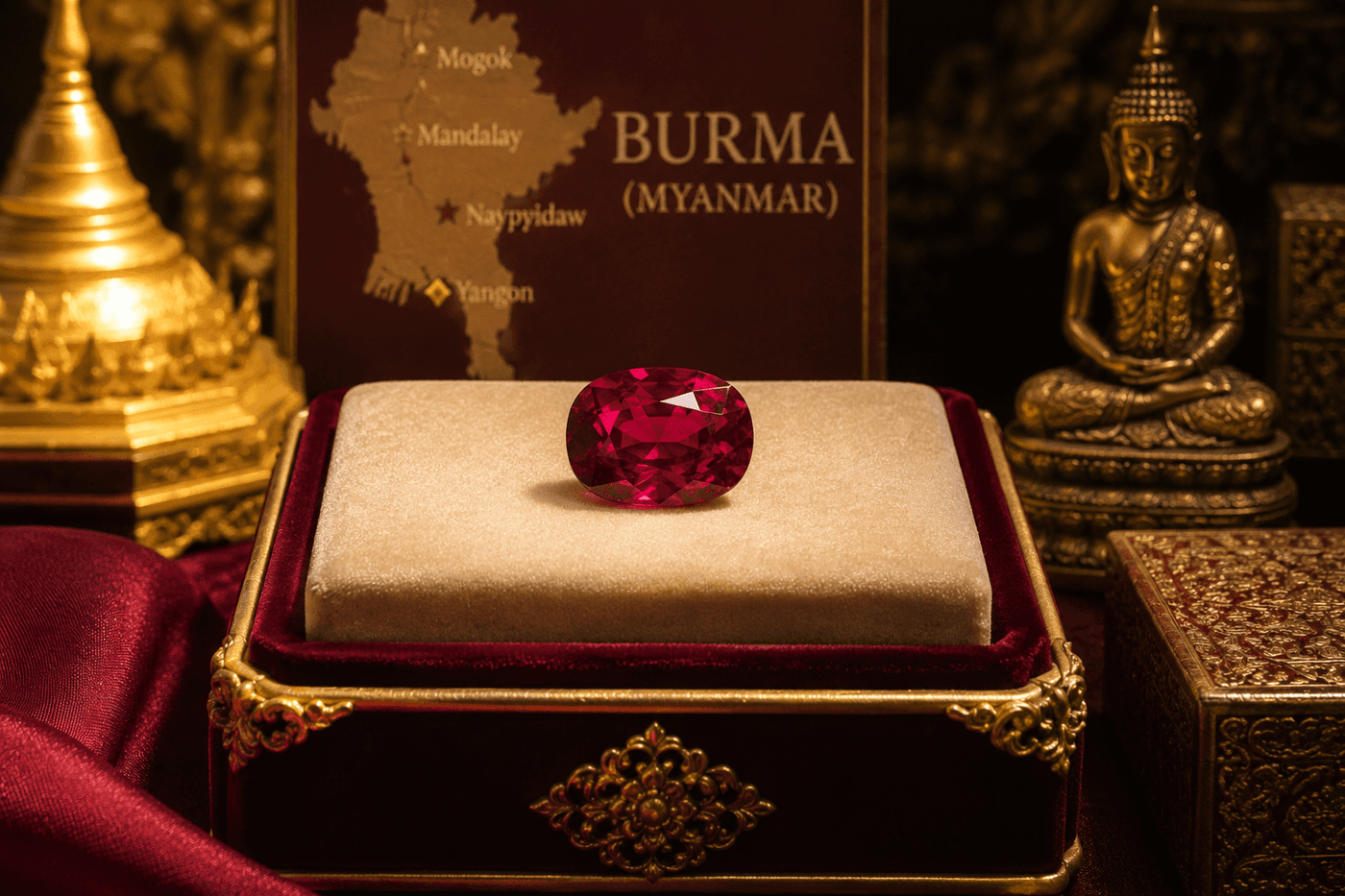
A massive ruby unearthed in Burma is being hailed as the second-largest ever discovered in the conflict-ridden country, weighing about eleven thousand carats—approximately 4.8 pounds—with experts saying the new find could be more valuable than a larger 1996 discovery due to its higher quality.
The ruby was unearthed near Mogok in the Mandalay region, the center of Burma's gem industry and an area affected by ongoing conflict, according to The Associated Press citing state media. The stone was found in mid-April, shortly after the country's traditional New Year celebrations. Although roughly half the size of a 21,450-carat ruby discovered in 1996, the new find's superior characteristics make it potentially more valuable.
"The stone has a purplish-red color with slight yellow tones, moderate transparency and a highly reflective surface—characteristics that experts say could make it more valuable than larger but lower-quality rubies discovered previously."
Burmese President Min Aung Hlaing and his cabinet have already inspected the stone in the country's capital of Naypyidaw. The discovery in the Mogok region, long famous for producing the world's finest rubies, comes amid ongoing conflict affecting mining operations and transportation infrastructure in areas where gemstones are extracted.
Burma has historically produced some of the world's most valuable rubies, with the Mogok region particularly renowned for stones featuring the deep red color and exceptional clarity that command premium prices in international gem markets. However, the country's political instability and ongoing conflicts create challenges for legitimate mining operations while enabling smuggling networks that operate outside official channels.
The gem industry represents a significant economic sector for Burma despite ongoing political turmoil. Major ruby discoveries generate substantial revenue for the government while attracting international attention to the country's mineral wealth. However, concerns persist about whether mining operations meet ethical labor and environmental standards given limited oversight in conflict-affected regions.
The massive ruby discovery highlights Burma's continued importance in global gem markets despite political instability that complicates legitimate mining operations. While the stone's exceptional quality could make it extremely valuable, questions remain about how proceeds from such discoveries benefit ordinary Burmese citizens versus government officials and connected elites. The gem industry's role in funding various factions within Burma's ongoing conflicts raises ethical concerns for international buyers considering purchases of Burmese rubies regardless of their size or beauty.