
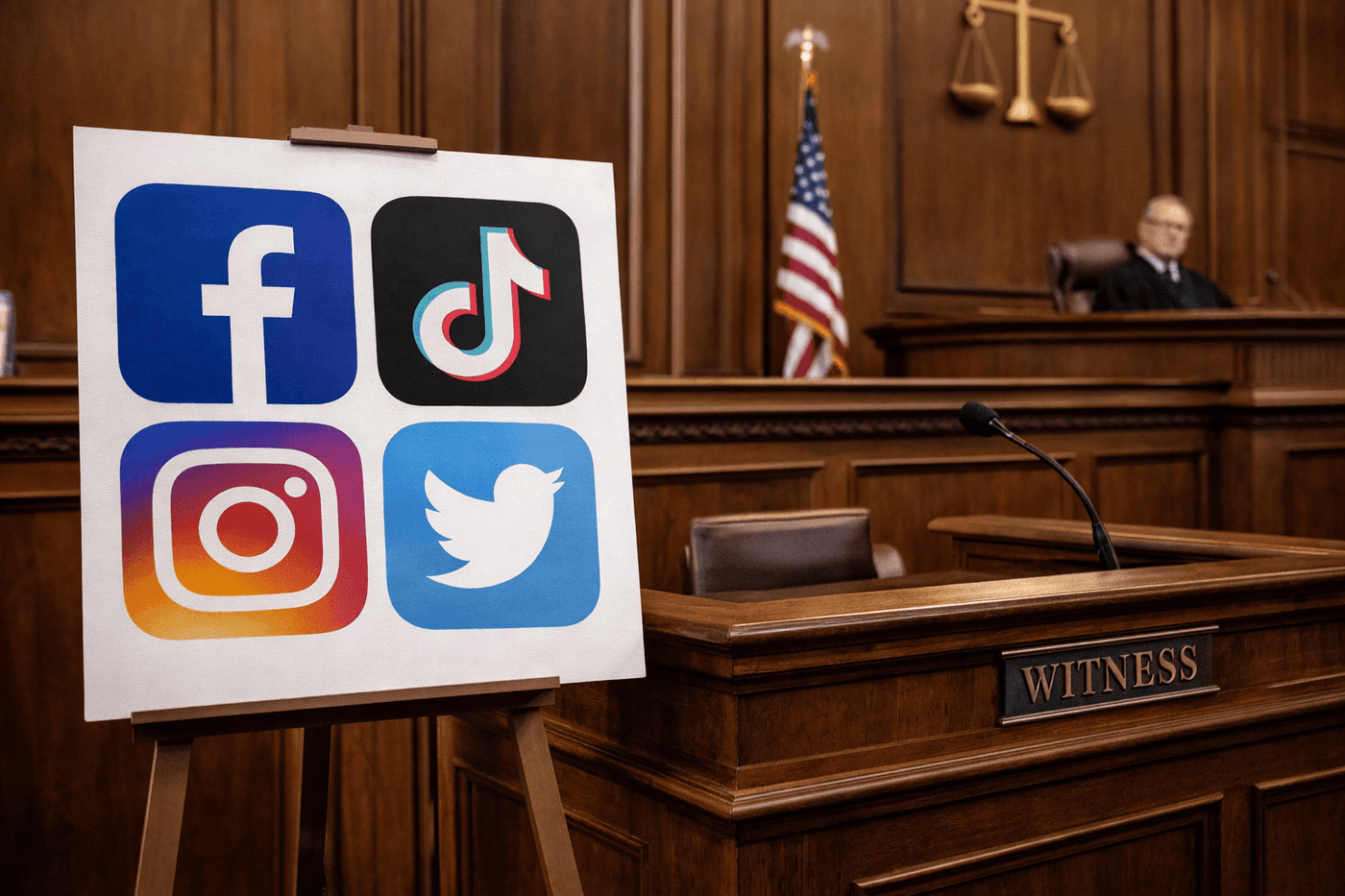
A Los Angeles County jury delivered a landmark verdict finding Meta and YouTube negligent in designing platforms that purposefully addict children, awarding three million dollars to a plaintiff in the first trial holding tech giants legally liable for social media addiction harm.
The jury determined that Meta and YouTube's negligence substantially caused harm to the now twenty-year-old plaintiff, identified by initials K.G.M., finding that companies failed to adequately warn users about dangers associated with Instagram and YouTube. The verdict assigned Meta seventy percent responsibility and YouTube thirty percent, establishing precedent in cases brought by more than sixteen hundred plaintiffs including over three hundred fifty families and two hundred fifty school districts.
"Social media platforms exploiting children's psychological vulnerabilities for profit deserve legal accountability, though conservatives must balance protecting minors with avoiding regulatory overreach that stifles innovation and restricts parental authority."
The trial, which included testimony from Mark Zuckerberg and other tech executives, represents the first in consolidated litigation challenging whether companies intentionally designed addictive features targeting young users. Evidence presented demonstrated that platforms employ sophisticated algorithms and design elements specifically engineered to maximize engagement time, particularly among vulnerable adolescent populations whose developing brains prove especially susceptible to addictive digital experiences.
Meta vowed to aggressively fight the verdict, likely appealing the decision while defending its platform design as providing valuable social connection rather than deliberate addiction mechanisms. However, the jury's findings suggest that evidence convinced ordinary citizens that tech companies knowingly harmed children through design choices prioritizing engagement metrics over user wellbeing—a determination that could reshape legal liability across the technology sector.
Conservative approaches to technology regulation traditionally favor market solutions and parental responsibility over government intervention. However, evidence that companies deliberately exploit children's psychological vulnerabilities creates legitimate grounds for legal accountability through tort litigation rather than preemptive regulation, allowing courts to establish liability standards based on actual harm rather than speculative concerns.
The verdict establishes that tech platforms cannot hide behind claims of neutral tools when evidence demonstrates intentional design choices targeting children's addictive responses. While preserving innovation and avoiding excessive regulation remains important, companies bear responsibility when purposefully harming minors for profit. The decision allows tort law to address legitimate concerns without requiring massive regulatory frameworks—a conservative approach holding wrongdoers accountable through civil justice rather than bureaucratic mandates that restrict everyone regardless of actual conduct.