

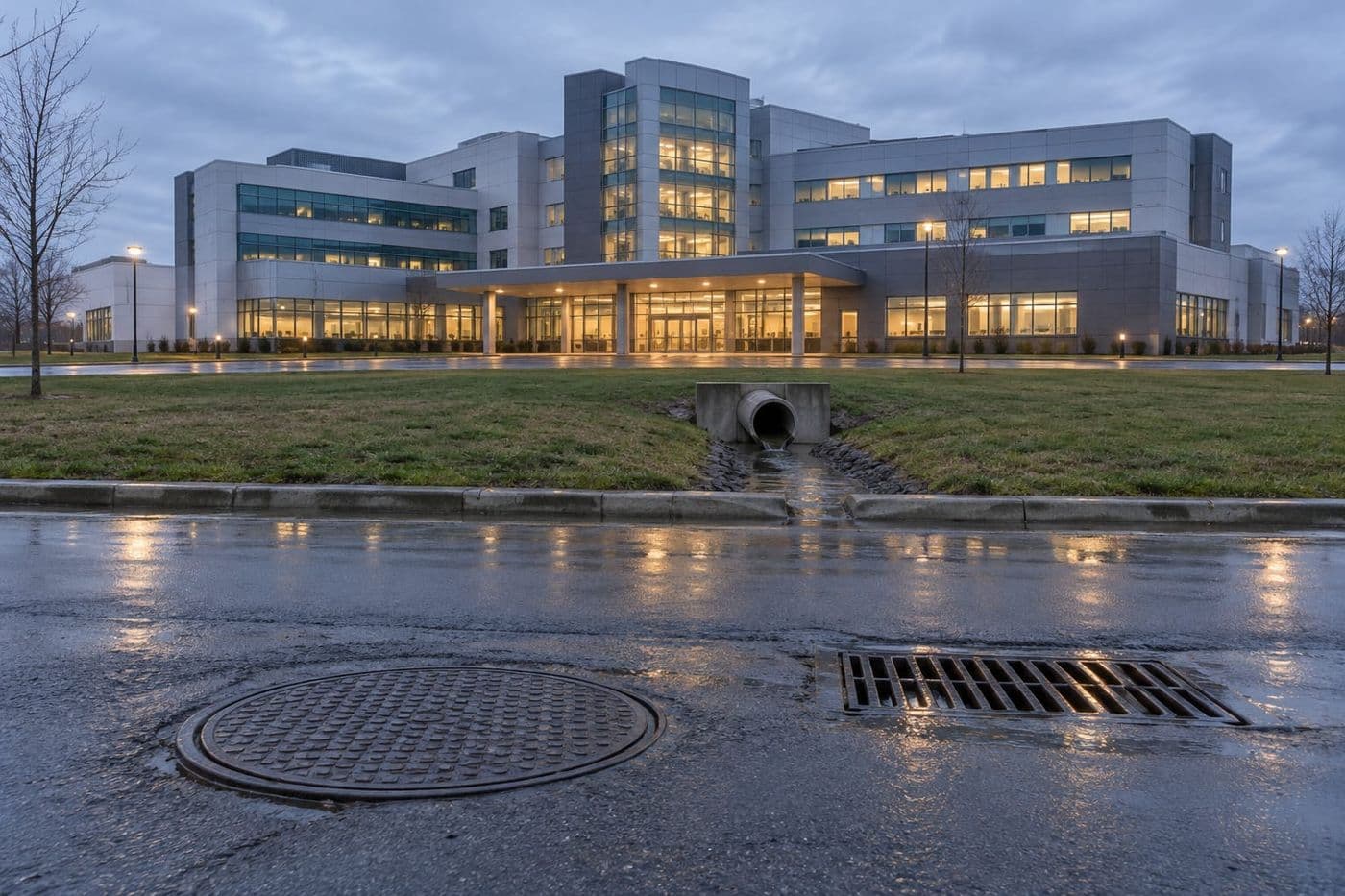
Researchers at Sweden’s University of Gothenburg report that sewage from all 10 hospitals they tested promoted antibiotic-resistant E. coli, while sewage from eight municipal treatment plants did not — a finding that points to hospital pipes, not city wastewater at large, as a place where resistance is actively being selected.
The study, published in Nature Communications and titled “Widespread selection of antibiotic resistance within hospital sewers,” was led by Joakim Larsson, professor of environmental pharmacology and director of the university’s Centre for Antibiotic Resistance Research. The team collected wastewater from 10 hospitals and 8 municipal treatment plants in Sweden, and then ran three separate experiments. In the first, they filtered the samples to remove naturally occurring bacteria and exposed E. coli isolates to the water. Significant selection for E. coli resistant to ciprofloxacin and cefotaxime occurred with every hospital sample and with none of the municipal samples. In the second, plastic plates were placed in sewer pipes for 30 days, and the slimy biofilms that grew on them were analyzed. Hospital biofilms showed significantly higher resistance to both drugs than the hospital wastewater itself, which the authors describe as direct evidence of selection happening naturally in the sewer. At municipal sites, resistance in biofilms and wastewater was similar. In the third, an E. coli strain engineered to resist fluoroquinolones and beta-lactams grew well in hospital sewage, where a sensitive strain otherwise could not. Ciprofloxacin was identified as a key driver, with cefotaxime also contributing.
“The findings suggest that similar resistance selection occurs in the sewers of most hospitals worldwide.” — Joakim Larsson, University of Gothenburg
Earlier studies often found more resistant bacteria in hospital wastewater than in the general sewage stream. The authors say that alone is “an indication but not strong evidence” of selection, because patients may simply carry more resistant gut bacteria than the general population. This study tried to close that gap. In a previous study, Larsson’s group found that filtered wastewater from one large Swedish hospital strongly selected for multidrug-resistant E. coli. Gothenburg’s press release says most conclusions about environmental effects of drugs come from experiments that add pharmaceuticals at measured concentrations, whereas this work documented effects directly in hospital sewer pipes. Larsson calls it the first direct field evidence in over 25 years conclusively linking observed environmental effects to pharmaceuticals excreted from humans. The press release says the last comparable evidence came in the late 1990s, when fish downstream of treatment plants were feminized by the contraceptive hormone ethinylestradiol, a substance Larsson also helped identify. The authors add that it is highly plausible hospital wastewater elsewhere also selects for resistance, since ciprofloxacin is one of the most widely used antibiotics in the world.
Antibiotics save lives, and no one serious argues that hospitals should withhold them from sick patients. Larsson himself says antibiotic use must always be guided by patients’ medical needs. But the evidence here carries a lesson about where to aim limited public money. Much of the debate over resistance has focused on broad, expensive upgrades to municipal treatment. The Gothenburg team says advanced treatment at municipal sites can reduce the spread of antibiotics and other pharmaceuticals, but cannot undo resistance that has already evolved in hospital sewage. If the problem is concentrated at the source, a targeted fix is the sensible answer, not a sweeping one. That is how taxpayer-funded public health should work: find where the risk is actually generated, measure it, and spend there first. Policy built on a hunch about where danger lives wastes dollars and leaves the real hazard in place. Hospitals, which already manage infection control and waste streams, are a natural place to start.
Finding more resistant bacteria in a sample is not the same as proving selection. Selection means the water itself gives resistant bacteria a growth advantage over sensitive ones. That is why the team filtered out native bacteria and tested E. coli in the water directly. Cefotaxime, the press release says, is used only in hospitals, so its presence points squarely to hospital sources. The study also notes that more than one in three Swedish hospital patients receive antibiotics at any given time. The experiments used E. coli, and the samples came from Swedish sites only, so the results do not by themselves measure risk to people. Other studies have found that wastewater from antibiotic manufacturing also promotes resistant bacteria, according to CIDRAP.
Source:Hospital sewers may be breeding grounds for dangerous superbugs, study finds
Think of a kitchen drain that keeps clogging. You can keep snaking the main line at the street, or you can find the sink where the grease goes in. The Gothenburg findings suggest hospital sewers are that sink. Larsson says knowing where resistant bacteria are promoted, and where they are less likely to be, is crucial when deciding how resources and efforts should be allocated. His team is working on a simple, targeted treatment method to reduce the selection pressure in sewers. That is a practical goal, and it fits the evidence. Sweden’s total antibiotic use is relatively low, yet its hospital use is comparable to many other European countries, so the lesson travels. Fix the source before you pay to mop the street.