
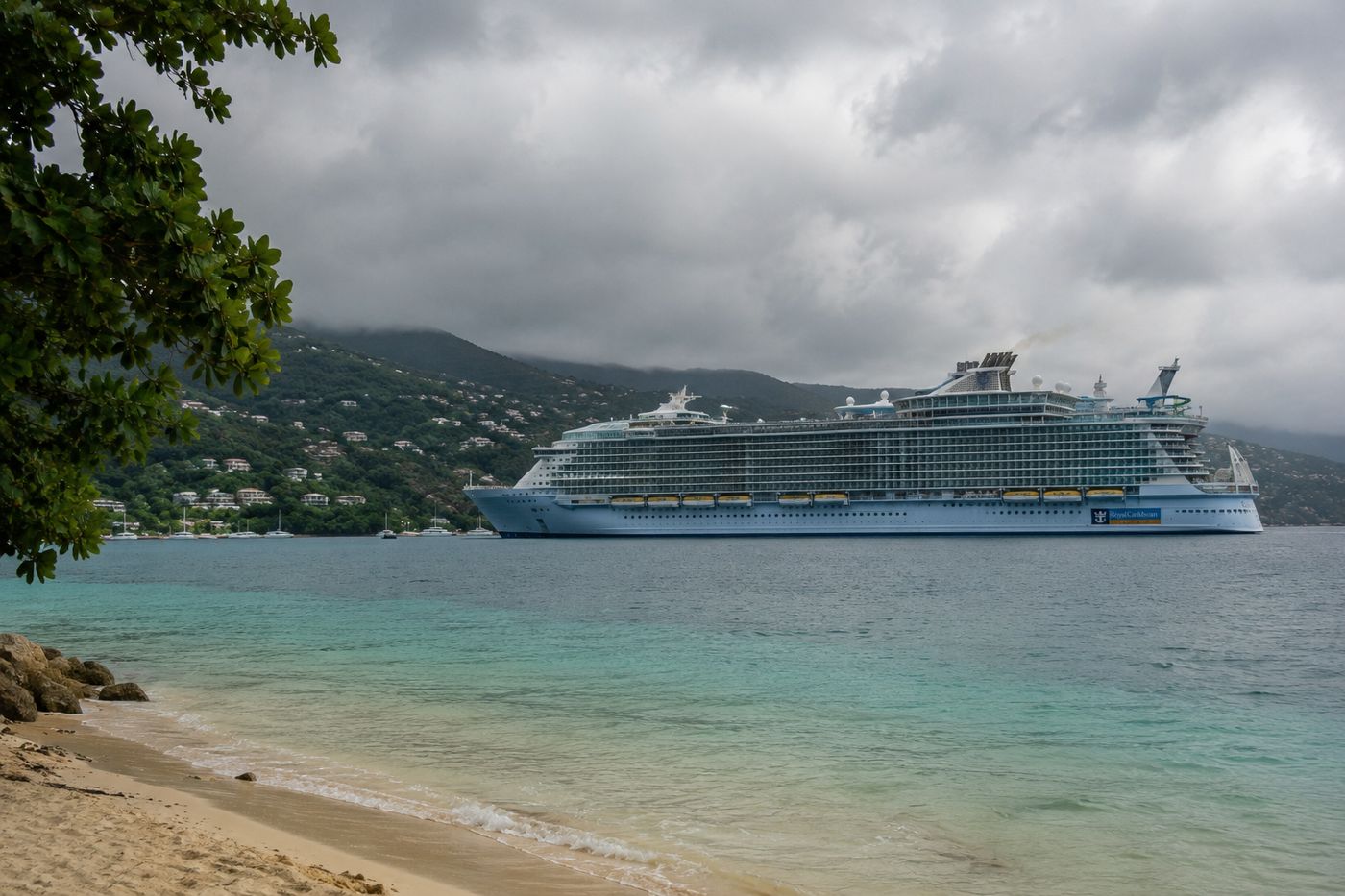
Royal Caribbean has extended its suspension of visits to Labadee — the cruise line's private beach resort on Haiti's northern coast and one of the most popular stops in the Caribbean — through June 2027, as gang violence and political collapse continue to make the island nation too dangerous for commercial passenger operations regardless of how secluded the destination is from Haiti's broader chaos.
Labadee sits on a fenced private peninsula roughly six miles northwest of Cap-Haïtien, Haiti's second-largest city, and has long offered cruise passengers an experience largely isolated from the instability that characterizes most of the country. The resort features white-sand beaches, water sports, local artisan markets, and the Dragon's Breath Flight Line — one of the longest over-water ziplines in the world. Royal Caribbean first paused visits to Labadee in 2024 as gang violence surged across Haiti and the U.S. State Department elevated the country to a Level 4 "Do Not Travel" advisory — the same designation applied to active war zones. The cruise line had hoped conditions would improve sufficiently to resume visits by mid-2026. They have not. The extension through June 2027 marks the third consecutive year in which Labadee has been effectively inaccessible to the millions of passengers who previously made it one of the most-visited private cruise destinations in the hemisphere.
"The safety and security of our guests and crew is always our top priority. We continue to monitor the situation in Haiti closely and look forward to returning to Labadee when conditions allow." — Royal Caribbean spokesperson
The State Department's Level 4 designation reflects the reality on the ground: armed gang coalitions control large portions of Haiti's territory, including significant areas of Port-au-Prince and corridors connecting major cities. The Haitian National Police force has been overwhelmed and in some cases outgunned by gang militias. A Kenyan-led multinational security support mission authorized by the United Nations has had limited operational success in restoring order, and political institutions remain fragmented following years of governance collapse. Passengers who have contacted Royal Caribbean are being rebooked on alternative Caribbean destinations. Travel agents report that some loyal Labadee regulars have been asking whether the resort will ever reopen — a question the cruise line has declined to answer directly.
For Royal Caribbean, the suspension carries real financial consequence. Labadee was a high-margin destination — the cruise line owns the infrastructure outright, keeps port fees, and generates significant onshore revenue from excursions, food, and beverage sales. The loss of Labadee from itineraries has required the company to redesign Caribbean routes across multiple ship deployments, in some cases substituting less profitable or less popular stops. Competitor MSC Cruises, which operates a similar private resort called Ocean Cay in the Bahamas, has benefited from itinerary shifts as Caribbean cruise demand has remained strong.
Haiti has been under a U.S. State Department Level 4 "Do Not Travel" advisory since 2024 — the department's highest warning level, shared with countries including Russia, North Korea, and active conflict zones. The advisory cites kidnapping, violent crime, civil unrest, and the absence of reliable emergency services. Labadee operates as a fully enclosed private compound with its own security perimeter; Royal Caribbean has maintained the resort's physical infrastructure during the suspension in anticipation of an eventual reopening.
Haiti's collapse is one of the Western Hemisphere's most acute and most ignored humanitarian crises. The country that won its independence in 1804 — the first Black republic in the world — is being held hostage by gang networks while the international community cycles through response frameworks that have produced little lasting improvement. For cruise passengers, the loss of Labadee is a vacation inconvenience. For the Haitian people who worked at the resort, lived in the region, or depended on the tourism economy it anchored, the closure is one more casualty of a catastrophe that has no end in sight.